

Low open rates and barely any clicks can leave small business owners and marketers wondering if their emails ever make an impact. Email engagement measures how recipients interact with your messages—from opening and reading to clicking links—and directly affects sales, customer loyalty, and lifetime value across Canadian, Australian, and European markets. Understanding what drives subscriber interaction lets brands move beyond basic metrics, empowering smarter automation and more meaningful results for every campaign.
Table of Contents
- What Email Engagement Really Means
- Types of Email Engagement Metrics Explained
- Measuring and Improving Subscriber Interactions
- Common Pitfalls That Lower Engagement Rates
- Proven Strategies to Boost Email Engagement
Key Takeaways
| Point | Details |
|---|---|
| Understanding Email Engagement | Email engagement involves not just opening emails, but measuring interactions like clicks and responses, which provide insights into customer interest and behavior. |
| Key Metrics to Track | Critical metrics include Open Rate, Click-Through Rate, Conversion Rate, Bounce Rate, and Unsubscribe Rate to assess campaign effectiveness. |
| Common Engagement Pitfalls | Issues such as poor sender reputation, unclean email lists, and generic content can significantly reduce engagement and must be addressed proactively. |
| Strategies for Improvement | Implementing strategies like personalization, segmentation, and consistent messaging can drive higher engagement and build long-term subscriber loyalty. |
What Email Engagement Really Means
Email engagement represents far more than simply opening a message. At its core, it measures how actively recipients interact with your email communications – beyond just passive receipt. Measuring precise email interaction metrics reveals critical insights into audience behavior and potential sales opportunities.
These interactions typically include several key behaviors: opening emails, clicking links, forwarding content, responding directly, and spending meaningful time reading the message. Each interaction signals different levels of interest and potential customer motivation. An opened email suggests mild curiosity. A clicked link indicates genuine interest. A forwarded message represents active endorsement.
Successful email engagement transforms communication from a one-way broadcast into a dynamic conversation. It allows businesses to track not just whether messages are received, but how deeply they resonate with the target audience. Smart marketers use these granular insights to refine messaging, segment audiences more precisely, and develop increasingly targeted communication strategies that drive meaningful sales outcomes.
Pro tip: Track your email engagement metrics weekly and look for patterns in timing, subject lines, and content that generate the highest interaction rates.
Types of Email Engagement Metrics Explained
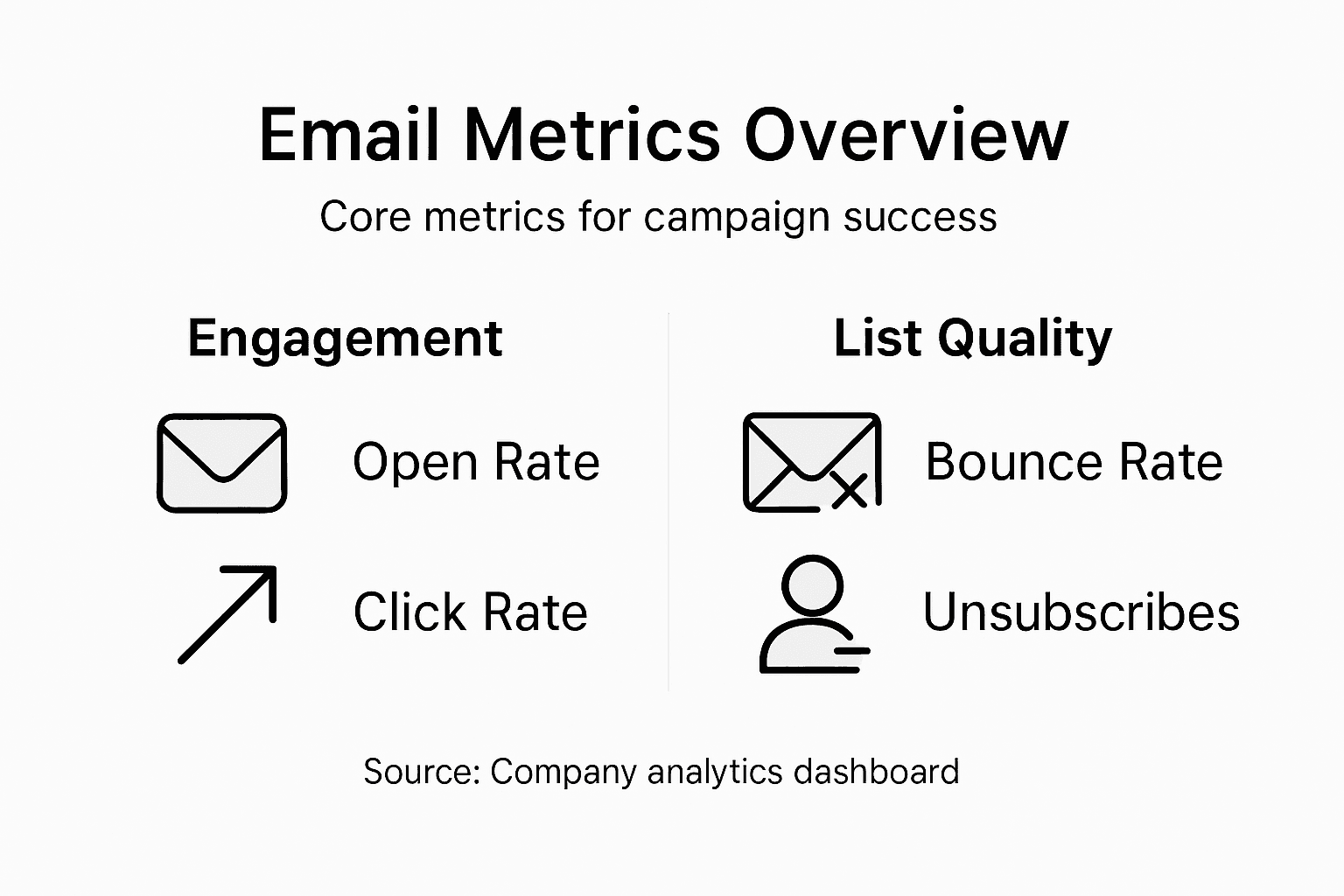
Understanding email engagement requires tracking multiple key performance indicators that reveal how subscribers interact with your messages. Essential email engagement metrics provide deep insights into audience behavior and communication effectiveness.
The primary metrics marketers should monitor include:
- Open Rate: Percentage of recipients who open your email
- Click-Through Rate (CTR): Number of subscribers who click links within the email
- Conversion Rate: Percentage of recipients completing a desired action
- Bounce Rate: Percentage of emails that cannot be successfully delivered
- Unsubscribe Rate: Number of subscribers opting out of future communications
These metrics work together to paint a comprehensive picture of email campaign performance. Open rates indicate initial interest, while click-through rates demonstrate deeper engagement. Conversion rates ultimately reveal the most critical metric: how many recipients take meaningful action after receiving your message. By analyzing these interconnected metrics, businesses can refine their email strategies, segment audiences more effectively, and create more targeted communication that drives sales and customer loyalty.

Here’s a summary of how key email engagement metrics influence marketing decisions:
| Metric | What It Measures | Business Impact |
|---|---|---|
| Open Rate | Recipient interest level | Determines subject line strength |
| Click-Through Rate | Link engagement | Identifies content effectiveness |
| Conversion Rate | Desired actions completed | Directly links to ROI |
| Bounce Rate | Delivery issues | Impacts sender reputation |
| Unsubscribe Rate | Loss of subscribers | Signals relevance of content |
Pro tip: Create a monthly dashboard tracking these engagement metrics to quickly identify trends and optimize your email marketing approach.
Measuring and Improving Subscriber Interactions
Advanced subscriber engagement strategies extend far beyond traditional tracking methods. Modern marketers recognize that meaningful interaction requires a holistic approach that considers multiple dimensions of subscriber behavior.
Effective measurement involves several critical strategies:
- Personalization: Tailoring content to individual subscriber preferences
- Segmentation: Dividing subscribers into distinct groups based on behavior
- Dynamic Tracking: Monitoring evolving interaction patterns
- Feedback Analysis: Collecting and interpreting subscriber responses
- Predictive Engagement: Using data to anticipate future subscriber actions
The most successful approaches combine quantitative metrics with qualitative insights. This means looking beyond simple click rates to understand the deeper motivations and needs of your subscriber base. By developing a nuanced understanding of subscriber interactions, businesses can create more resonant, valuable communication that drives genuine engagement and long-term loyalty.
Pro tip: Implement a quarterly subscriber feedback survey to gain direct insights into their preferences and continuously refine your engagement strategy.
Common Pitfalls That Lower Engagement Rates
Email deliverability challenges can dramatically undermine your marketing efforts, creating invisible barriers that prevent your messages from reaching and resonating with potential customers. Understanding these obstacles is crucial for maintaining a healthy, responsive email list.
The most significant pitfalls that sabotage email engagement include:
- Poor Sender Reputation: High bounce rates and spam complaints
- Weak Authentication: Lack of SPF, DKIM, and DMARC protocols
- Unclean Email Lists: Sending to inactive or outdated contacts
- Generic Content: Messages that fail to personalize or segment audiences
- Inconsistent Messaging: Irregular email frequency causing subscriber fatigue
Successful email marketing requires a proactive approach to avoiding these common traps. This means constantly cleaning your email list, crafting targeted and personalized content, maintaining consistent communication, and implementing robust email authentication methods. By addressing these potential roadblocks, businesses can significantly improve their email engagement rates and create more meaningful connections with their audience.
Compare common pitfalls with proven solutions for higher engagement:
| Pitfall | Impact | Solution |
|---|---|---|
| Poor Sender Reputation | Emails sent to spam or blocked | Maintain clean lists, monitor bounces |
| Generic Content | Low reader interest, high unsubscribes | Personalize email messaging |
| Unclean Email Lists | High bounce rates, wasted resources | Regularly audit and update contacts |
| Inconsistent Messaging | Subscriber fatigue or disengagement | Set a consistent send schedule |
Pro tip: Conduct a quarterly email list audit to remove inactive subscribers and validate email addresses, ensuring your engagement metrics remain accurate and impactful.
Proven Strategies to Boost Email Engagement
Smart marketers understand that increasing email engagement requires a strategic, multi-dimensional approach. Successful email campaigns are not about sending more messages, but about delivering more value with each communication.
Key strategies for boosting email engagement include:
- Personalization: Craft messages that speak directly to individual subscriber preferences
- Segmentation: Divide your email list into targeted groups based on behavior, demographics, and interests
- Compelling Subject Lines: Create curiosity-driven, value-packed headlines that demand attention
- Mobile Optimization: Ensure emails look great and function perfectly on all devices
- Consistent Timing: Develop a predictable email schedule that subscribers can anticipate
- Interactive Content: Incorporate elements like surveys, quizzes, and clickable graphics
The most effective email strategies transform communication from a one-way broadcast into a dynamic, interactive experience. By focusing on relevance, timing, and genuine value, businesses can create email content that subscribers actually look forward to receiving. This approach not only increases open rates but also builds long-term trust and engagement.
Pro tip: Implement an A/B testing protocol for your email campaigns, systematically testing subject lines, content, and send times to continuously refine your engagement strategy.
Unlock True Email Engagement to Drive Sales Success
The challenge many businesses face is turning basic email opens into meaningful interactions that lead to real sales. This article highlights how email engagement metrics like open rates, click-through rates, and conversion rates reveal how well your messages resonate with customers. If you are struggling with weak personalization, inconsistent messaging, or low subscriber activity these pain points can stall growth and reduce your email marketing ROI. Understanding these specific concepts like segmentation, subscriber feedback, and list hygiene is critical for transforming email campaigns into a silent sales machine working 24/7.
At Emailedgar we specialize in helping businesses conquer these exact challenges. Our platform provides expert guidance combined with proven strategies to build and nurture an engaged email list that boosts conversions and keeps your brand top-of-mind.
Ready to stop guessing and start knowing what truly drives your audience to take action Explore personalized coaching and tools designed around the principles from this article. Discover how to automate your email marketing with confidence and create messages your customers actually want to open and click. Take the first step toward mastering email engagement today by visiting Emailedgar and learning more about our proven email marketing strategies that deliver real sales impact.
Frequently Asked Questions
What is email engagement?
Email engagement refers to the active interactions recipients have with email communications, including opening emails, clicking links, and responding directly.
Why is measuring email engagement important?
Measuring email engagement provides critical insights into audience behavior and helps businesses refine their messaging and communication strategies to drive sales.
What are some key metrics to track for email engagement?
Important email engagement metrics include open rate, click-through rate (CTR), conversion rate, bounce rate, and unsubscribe rate, each indicating different levels of recipient interaction and engagement.
How can I improve email engagement with my subscribers?
To improve email engagement, focus on personalization, segmentation, compelling subject lines, mobile optimization, and consistent timing in your email communications.