

Many American small business owners find themselves overwhelmed by endless hours spent crafting and sending emails. Automating your email marketing can save time and create more meaningful connections with customers. Setting clear goals, segmenting your lists, and scheduling targeted sequences can lead to higher engagement and sales. This guide covers practical strategies to help you achieve measurable results while reducing manual effort, ensuring your marketing supports business growth. Focus on email marketing automation and watch your campaigns become more effective and manageable.
Table of Contents
- Step 1: Define Your Email Marketing Objectives
- Step 2: Build And Segment Your Email List
- Step 3: Set Up Automated Email Campaigns
- Step 4: Create And Schedule Targeted Email Sequences
- Step 5: Monitor Results And Refine Your Process
Quick Summary
| Key Takeaway | Explanation |
|---|---|
| 1. Define clear email objectives | Utilize the SMART framework to create measurable goals like increasing open rates by specific percentages. |
| 2. Segment your email list effectively | Use various criteria, such as demographics and engagement, to tailor content for distinct audience groups. |
| 3. Automate email campaigns strategically | Set triggers based on customer actions to send timely, personalized emails without manual effort. |
| 4. Create targeted email sequences | Map out customer journeys and design sequences for different stages, ensuring relevant content is delivered. |
| 5. Monitor and refine your strategy | Analyze key metrics regularly and adjust campaigns based on performance data to improve results. |
Step 1: Define your email marketing objectives
Successful email marketing requires strategic goal setting. Your objectives will serve as the roadmap guiding every aspect of your campaign strategy, ensuring targeted and measurable outcomes.
To create effective email marketing goals, implement the SMART framework for precise targeting. This approach helps you develop clear, actionable objectives that align directly with your business growth. Focus on specific metrics like increasing email open rates, improving click through percentages, or generating more sales conversions. Each goal should be quantifiable and time sensitive – for instance, “Increase email engagement by 25% within the next quarter” provides a concrete target.
Start by analyzing your current email performance baseline. Review existing metrics such as open rates, click rates, and conversion percentages. Identify areas with the most potential for improvement. Are your welcome emails underperforming? Is your product announcement sequence generating enough interest? Understanding these nuances allows you to craft precise objectives that address specific marketing challenges.
Your objectives might include expanding subscriber lists, segmenting audiences for personalized communication, or driving more direct sales through targeted email campaigns. Remember that email marketing goals should always connect back to broader business objectives like revenue growth, customer retention, or brand awareness.
Here is a summary of common email marketing objectives and their business impact:
| Objective | Example Goal | Business Impact |
|---|---|---|
| Increase engagement | Raise open rates by 20% in Q2 | Builds stronger customer loyalty |
| Boost conversions | Achieve 10% sales via email offers | Drives direct revenue growth |
| Expand subscriber base | Gain 500 new signups monthly | Grows marketing reach |
| Improve retention | Reduce unsubscribes by 15% in six months | Enhances lifetime value |
| Support brand awareness | Raise click-through to blog by 30% | Increases brand recognition |
Pro tip: Track your email marketing objectives using a dedicated spreadsheet with clear columns for baseline metrics, target goals, current performance, and progress tracking.
Step 2: Build and segment your email list
Growing and organizing an effective email list is crucial for targeted marketing success. Your email list represents a direct communication channel with potential customers and requires strategic development and management.
Start by implementing multiple opt-in methods to attract subscribers. Create compelling signup forms on your website, leverage social media platforms, and consider offering valuable lead magnets like free guides or exclusive content. Advanced email segmentation strategies can help you divide subscribers into meaningful groups based on their demographics, behaviors, and engagement levels.
Segmentation allows you to deliver personalized content that resonates with specific audience segments. Break down your list using criteria such as purchase history, geographic location, engagement frequency, or customer lifecycle stage. For example, new subscribers might receive different welcome content compared to long-term customers. This targeted approach increases open rates, click through percentages, and overall marketing effectiveness.

Collect detailed information during signup by using strategic form fields that capture relevant data. Include optional questions about professional interests, industry, or specific challenges. This additional context enables more precise segmentation and helps you craft highly relevant email content that speaks directly to each subscriber group.
Pro tip: Regularly clean your email list by removing inactive subscribers to maintain high deliverability rates and engagement metrics.
Here is a comparison of list segmentation criteria and their marketing outcomes:
| Segmentation Criteria | Example Data Used | Expected Outcome |
|---|---|---|
| Demographics | Age, location, industry | Tailored content recommendations |
| Engagement Level | Open and click patterns | Customized messaging frequency |
| Purchase History | Past transactions, products | Relevant product promotions |
| Customer Lifecycle | New vs. loyal subscribers | Stage-appropriate email series |
Step 3: Set up automated email campaigns
Automated email campaigns transform how businesses communicate with their audience by delivering precisely timed and personalized messages without constant manual intervention. Creating an effective workflow requires strategic planning and thoughtful implementation.
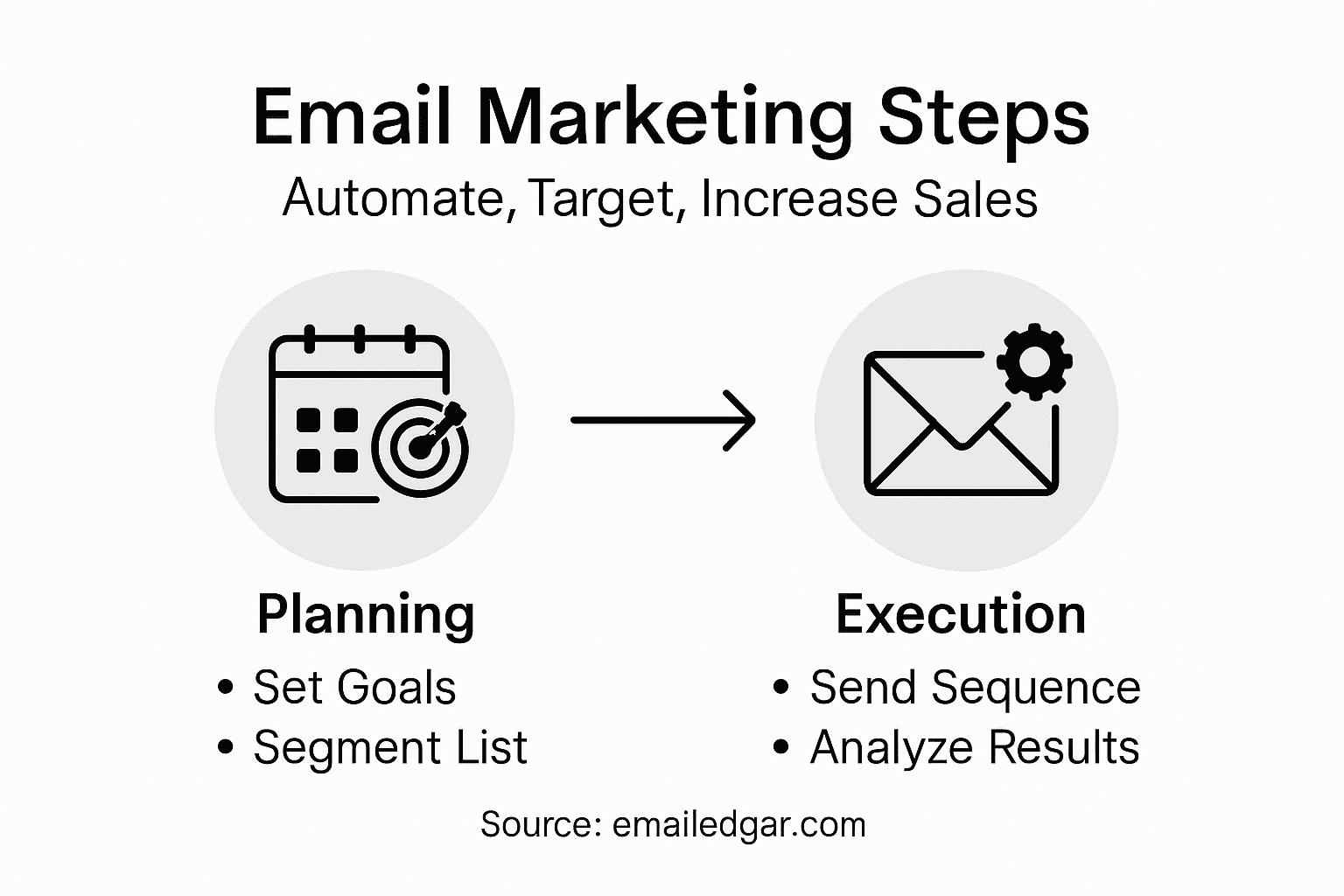
Email marketing automation strategies enable businesses to design intelligent communication sequences that respond automatically to specific customer actions. Start by mapping out your campaign triggers such as welcome series for new subscribers, abandoned cart reminders, post purchase follow ups, or re engagement messages for inactive customers. Each workflow should have a clear objective and include multiple touchpoints that guide subscribers through a meaningful journey.
Design your automated email sequences with carefully crafted content that feels personal and relevant. Utilize dynamic content fields that automatically populate subscriber names, recent purchase details, or other personalized information. Consider creating different email paths based on subscriber behaviors such as clicking specific links, making purchases, or demonstrating particular interests. This level of customization ensures that each recipient receives messages most likely to resonate with their individual needs and preferences.
Set up tracking and analytics to monitor the performance of your automated campaigns. Implement split testing for email subject lines, content variations, and send times to continuously optimize your approach. Pay attention to key metrics like open rates, click through rates, and conversion percentages to understand how your automated workflows are performing and where improvements can be made.
Pro tip: Schedule regular reviews of your automated email workflows every 90 days to ensure they remain aligned with your current marketing goals and audience expectations.
Step 4: Create and schedule targeted email sequences
Targeted email sequences are powerful tools for nurturing customer relationships and driving consistent sales. Crafting these strategic communication pathways requires a thoughtful approach that connects with your audience at precisely the right moments.
Begin by developing a comprehensive map of your customer journey. Email marketing best practices emphasize creating sequences that align with different stages of customer interaction. Design distinct email paths for scenarios like new subscriber onboarding, post purchase follow up, abandoned cart recovery, and customer reengagement. Each sequence should tell a cohesive story that guides subscribers toward taking specific actions.
Create content that feels personalized and valuable for each stage of the customer journey. For welcome sequences, focus on building trust and introducing your brand value. In post purchase series, provide additional value through educational content, usage tips, or complementary product recommendations. Abandoned cart sequences should include compelling reasons to complete the purchase, perhaps with time sensitive incentives or addressing potential purchase barriers.
Utilize advanced scheduling techniques to optimize email timing. Consider factors like subscriber time zones, past engagement patterns, and individual preferences. Set up intelligent triggers that automatically send emails based on specific user behaviors or predetermined intervals. This approach ensures your messages arrive when subscribers are most likely to be receptive and engaged.
Pro tip: Develop a content calendar that maps out your email sequences at least 90 days in advance, allowing flexibility for real time adjustments based on performance metrics.
Step 5: Monitor results and refine your process
Measuring and analyzing your email marketing performance is crucial for continuous improvement and maximizing your sales potential. Understanding how your campaigns perform provides actionable insights that can transform your marketing strategy.
Marketing email campaign performance requires a comprehensive approach to tracking key metrics. Focus on critical indicators like delivery rates, open rates, click through percentages, and conversion metrics. Pay close attention to how different segments of your audience interact with your emails. Some subscriber groups might respond differently to subject lines, content styles, or sending times. Track these nuances to understand what resonates most effectively with your audience.
Develop a systematic approach to interpreting your email marketing data. Create monthly reports that compare performance across different campaigns and highlight emerging trends. Look for patterns in subscriber behavior such as which types of content generate the most engagement, what time of day yields highest open rates, and which subject lines drive maximum interaction. Use A B testing to experiment with different elements of your emails and scientifically validate which approaches generate the best results.
Be prepared to make continuous adjustments based on your analytical insights. If certain email sequences are underperforming, redesign their content or timing. Segment your audience more precisely if engagement rates suggest misalignment. Watch for subtle shifts in subscriber preferences and be willing to pivot your strategy quickly. The most successful email marketing campaigns are those that remain flexible and responsive to real world data.
Pro tip: Set up automated reporting dashboards that provide weekly snapshot insights, allowing you to track performance trends without manual data compilation.
Unlock Your Sales Potential With Automated Email Marketing
The article highlights the challenge of crafting precise, personalized, and automated email campaigns that consistently engage your audience and boost sales. Common pain points include setting clear goals using the SMART framework, building segmented email lists, and optimizing automated workflows to nurture customer relationships effectively. Overcoming these obstacles is key to transforming email marketing into a reliable sales engine working around the clock.
At emailedgar.com, we understand these hurdles and offer proven strategies to help you implement automated email campaigns that drive real results. By focusing on targeted sequences and continuous performance monitoring, you can create meaningful connections with your subscribers while increasing conversions. Take advantage of our resources, including expert coaching, actionable guides, and exclusive offers like our email marketing strategy book, designed to turn your emails into a silent sales machine.
Ready to elevate your email marketing and make consistent sales growth a reality Let emailedgar.com guide you through every step from goal setting to automation mastery Discover now how to build, segment, and automate your email campaigns with confidence and watch your business thrive. Visit emailedgar.com today to get started and access exclusive free resources tailored for your success.
Frequently Asked Questions
What are the key steps in the automated email marketing process for boosting sales?
To boost sales through email marketing, you should first define your objectives, build and segment your email list, set up automated campaigns, create targeted email sequences, and monitor results. Follow these steps to establish a strategic approach that maximizes engagement and drives sales conversions.
How can I measure the success of my automated email campaigns?
You can measure the success of your automated email campaigns by tracking key metrics like open rates, click-through rates, and conversion percentages. Regularly analyze these metrics, and adjust your strategies based on performance to improve results within the next 30 days.
What should be included in an email sequence for new subscribers?
In an email sequence for new subscribers, include a welcome email that introduces your brand and key values, followed by educational content and exclusive offers. Make these emails engaging to encourage ongoing interaction and aim for a 20% increase in engagement within the first few weeks.
How can I improve engagement rates in my automated email marketing?
To improve engagement rates, segment your audience based on demographics and behavior, and personalize your content accordingly. Use dynamic elements in your emails to make communications feel more relevant and aim to raise your open rates by 15% over the next quarter.
What are the benefits of segmentation in email marketing?
Segmentation allows you to send more targeted and relevant emails to your subscribers, which can lead to higher open and conversion rates. By effectively targeting specific groups, you can enhance customer interactions and improve overall marketing effectiveness, potentially increasing sales by 10%.
How often should I review my automated email workflows?
You should review your automated email workflows every 90 days to ensure they align with current marketing goals and audience expectations. Regular assessments allow you to fine-tune your email strategies and keep your content fresh and effective.