

Struggling to keep customer attention as competition increases online is a challenge familiar to many e-commerce owners. Email marketing stands out because it enables direct and personalized communication with your audience, sidestepping unpredictable social media algorithms. By focusing on automated email marketing strategies, you can build lasting customer relationships, deliver timely messages, and track exactly what drives results, giving your business a clear sales advantage.
Table of Contents
- What Business Email Marketing Really Means
- Key Email Marketing Types And Tools
- How Automated Email Campaigns Drive Sales
- Building Customer Loyalty With Email Strategies
- Risks, Compliance, And Mistakes To Avoid
- Comparing Email With Other Marketing Channels
Key Takeaways
| Point | Details |
|---|---|
| Strategic Communication | Business email marketing allows for personalized, direct connections with customers, enhancing engagement and loyalty. |
| Automated Campaigns | Using automation tools enables businesses to deliver targeted messages efficiently, optimizing sales processes and customer interactions. |
| Compliance Necessity | Adhering to email marketing regulations like GDPR and CAN-SPAM is crucial to avoid penalties and maintain customer trust. |
| Channel Superiority | Email marketing outperforms other channels in personalization and measurable outcomes, making it a central element of a robust marketing strategy. |
What Business Email Marketing Really Means
Business email marketing represents a strategic digital communication approach where organizations leverage email channels to connect directly with potential and existing customers. Unlike traditional advertising methods, direct marketing via email allows businesses to craft personalized messages that speak precisely to customer needs and interests.
At its core, email marketing is more than just sending promotional content. It involves building relationships, nurturing leads, and creating targeted communication strategies that transform casual subscribers into loyal customers. Businesses can use sophisticated automation tools to segment audiences, track engagement metrics, and deliver highly relevant content that resonates with specific customer groups.
The true power of email marketing lies in its ability to provide measurable, cost-effective communication. Commercial messaging through email enables companies to reach thousands of potential customers instantly, track open rates, monitor click-through rates, and adjust strategies in real-time. This data-driven approach allows small businesses and large enterprises alike to optimize their marketing efforts with unprecedented precision.
Pro tip: Create email segments based on customer behavior and preferences to dramatically increase engagement and conversion rates.
Key Email Marketing Types and Tools
Email marketing encompasses several strategic approaches designed to engage customers and drive business growth. These tools and types range from simple newsletter distributions to complex, targeted communication platforms that leverage advanced segmentation and automation technologies. Businesses can choose from multiple email marketing strategies tailored to specific organizational goals and customer engagement needs.
The primary email marketing types include welcome series, promotional campaigns, transactional emails, behavioral trigger emails, and drip marketing sequences. Each type serves a distinct purpose: welcome series introduce new subscribers to a brand, promotional campaigns highlight special offers, transactional emails confirm purchases, behavioral trigger emails respond to specific customer actions, and drip marketing nurtures leads through carefully planned communication stages. Automated email marketing tools enable businesses to create sophisticated, personalized email journeys that adapt to individual customer interactions.
Here’s a summary of key email marketing types and their main business purposes:
| Email Type | Primary Business Goal | Typical Content Example |
|---|---|---|
| Welcome Series | Introduce brand and set expectations | Greeting, brand story, sign-up offer |
| Promotional Campaigns | Drive sales and boost traffic | Discounts, flash sales, product launches |
| Transactional Emails | Confirm actions or purchases | Receipts, shipping updates, order details |
| Behavioral Trigger Emails | Increase engagement based on actions | Cart reminders, re-engagement offers |
| Drip Marketing Sequences | Nurture leads through stages | Educational content, product tips |
Key features to consider when selecting email marketing tools include audience segmentation capabilities, automation workflows, integration options, analytics dashboards, A/B testing functionalities, and mobile responsiveness. Small businesses might prioritize user-friendly interfaces and cost-effectiveness, while larger enterprises often require advanced customization, comprehensive reporting, and multi-channel integration capabilities. The right email marketing tool can transform communication strategies from generic broadcasts to highly targeted, data-driven interactions.
Pro tip: Implement a dynamic segmentation strategy that continuously updates customer profiles based on real-time engagement metrics to maximize email marketing effectiveness.
How Automated Email Campaigns Drive Sales
Automated email campaigns have revolutionized the way businesses approach sales and customer engagement. Email marketing automation strategies enable companies to create sophisticated communication workflows that dramatically improve sales efficiency, reduce manual tasks, and deliver personalized experiences at scale. These intelligent systems track customer behaviors, trigger contextually relevant messages, and nurture leads through precisely timed interactions.

The mechanics of automated email campaigns involve complex yet seamless trigger-based communication. When a customer performs a specific action – such as downloading a resource, abandoning a cart, or completing a purchase – the system automatically generates and sends a targeted email response. Personalized email workflows allow businesses to create intricate communication paths that adapt to individual customer journeys, dramatically increasing the likelihood of conversion by delivering the right message at exactly the right moment.
Successful automated email campaigns rely on several critical components: robust customer data collection, sophisticated segmentation strategies, dynamic content personalization, and continuous performance analytics. Businesses can implement various automated sequences, including welcome series for new subscribers, re-engagement campaigns for inactive customers, post-purchase follow-ups, and sophisticated lead nurturing drip campaigns. These automated systems transform email from a simple communication tool into a powerful sales acceleration mechanism that operates continuously without constant manual intervention.
Pro tip: Design your automated email sequences with clear conversion goals and implement granular tracking to continuously optimize each stage of your customer communication workflow.
Building Customer Loyalty With Email Strategies
Customer loyalty programs through email represent a sophisticated approach to building long-term relationships with customers. Unlike traditional marketing methods, email provides a direct, personalized channel that allows businesses to create meaningful connections by delivering targeted content that resonates with individual customer needs and preferences. By understanding and anticipating customer expectations, companies can transform standard communication into a powerful loyalty-building tool.
Successful email loyalty strategies involve several key components: precise audience segmentation, personalized messaging, and strategic communication timing. Businesses can develop tiered loyalty approaches that recognize and reward customer engagement levels, creating a sense of progression and exclusivity. These strategies might include personalized birthday offers, exclusive early access to sales, points-based reward systems, and tailored content that speaks directly to each customer’s unique interests and purchasing history.
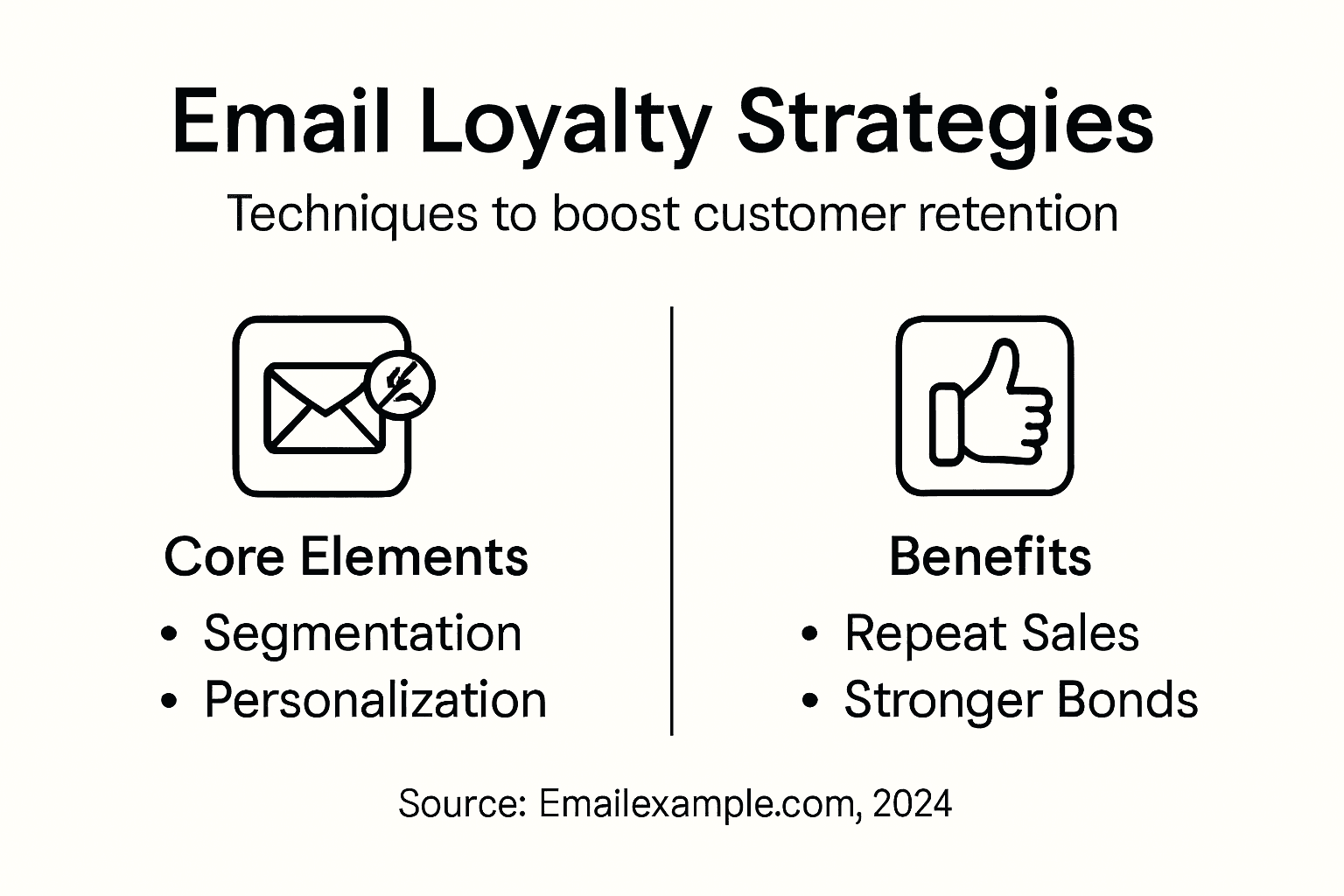
The most effective email loyalty programs go beyond transactional interactions, focusing on creating emotional connections. Building customer relationships through email requires a nuanced approach that combines data-driven insights with genuine, empathetic communication. This means crafting emails that provide real value, whether through educational content, exclusive insights, or personalized recommendations that demonstrate a deep understanding of the customer’s needs and preferences.
Pro tip: Create a dynamic email loyalty program that adapts to individual customer behaviors, using progressive profiling to continuously refine and personalize your communication strategy.
Risks, Compliance, and Mistakes to Avoid
Email marketing compliance regulations present complex challenges for businesses seeking to leverage digital communication effectively. Legal frameworks like GDPR and CAN-SPAM Act impose strict requirements on how companies collect, manage, and utilize customer email data. Violations can result in substantial financial penalties, ranging from thousands to millions of dollars, and potentially irreparable damage to a company’s reputation and customer trust.
Businesses must navigate multiple critical compliance considerations, including obtaining explicit consent, providing transparent opt-out mechanisms, and maintaining rigorous data protection standards. Key risks include unsolicited email sending, inadequate consent documentation, failure to implement secure data management practices, and neglecting individual privacy rights. Common email marketing mistakes often stem from poor list management, inconsistent communication protocols, and insufficient understanding of regulatory requirements that vary across different geographic regions.
Implementing a robust email compliance strategy requires comprehensive approaches that go beyond basic legal checklists. This involves developing sophisticated consent management systems, creating clear privacy policies, implementing advanced data security protocols, and maintaining meticulous records of user interactions and permissions. Companies must also invest in ongoing staff training, regular compliance audits, and adaptive technologies that can quickly respond to evolving regulatory landscapes and protect both organizational interests and customer privacy.
Pro tip: Conduct quarterly compliance reviews of your email marketing practices, documenting consent processes and maintaining a transparent, user-friendly unsubscribe mechanism to mitigate potential legal risks.
Comparing Email With Other Marketing Channels
Email marketing channels consistently outperform traditional and digital marketing approaches in critical performance metrics. Unlike social media platforms with unpredictable algorithms or paid advertising with fluctuating costs, email provides businesses a direct, controllable communication pathway with predictable engagement and conversion potential. This channel offers unparalleled precision in targeting, allowing companies to segment audiences, personalize content, and track interactions with unprecedented granularity.
Each marketing channel presents unique strengths, but email demonstrates superior capabilities in customer retention and direct sales generation. Social media excels at brand awareness and engagement, while search engine marketing captures potential customers with intent. However, marketing channel comparison reveals email’s remarkable advantages: higher return on investment, deeper personalization, and more immediate, measurable results. Businesses can leverage email’s ability to nurture leads through sophisticated automated sequences that adapt to individual customer behaviors and preferences.
Comparing quantitative performance metrics demonstrates email’s dominance. Most marketing channels require significant ongoing investment with uncertain returns, whereas email marketing provides consistent, scalable communication at a fraction of the cost. Advanced email strategies enable businesses to create sophisticated, data-driven campaigns that integrate seamlessly with other marketing efforts, providing a comprehensive approach to customer acquisition and retention. The key differentiator lies in email’s unique combination of direct communication, measurable outcomes, and potential for deep personalization.
To help you compare major marketing channels, see this concise comparison of strengths and best uses:
| Channel | Core Strength | Best Used For | Key Limitation |
|---|---|---|---|
| Personalization & measurability | Retention, direct sales | List fatigue risk | |
| Social Media | Brand awareness & reach | Community building, quick updates | Algorithm dependence |
| Paid Search | High-intent lead capture | Immediate conversions, traffic | Rising ad costs |
| Display Ads | Visual product promotion | Brand recall, remarketing | Lower direct engagement |
Pro tip: Develop a multi-channel marketing strategy that uses email as the central communication hub, integrating insights from other channels to create a cohesive, data-driven approach to customer engagement.
Unlock Sales Growth with Automated Email Marketing Today
The article highlights a critical challenge many businesses face: converting email communication into consistent sales growth while maintaining customer engagement without overwhelming manual effort. If you struggle with building an effective email list or crafting personalized automated campaigns that drive measurable results, you are not alone. Concepts like behavioral trigger emails, segmentation, and automation workflows are proven strategies that can feel complex to implement without the right support.
At emailedgar.com, we understand that email marketing must act as a silent sales machine working 24/7 to nurture leads and boost conversions. Our platform guides you to build your email list systematically, set up personalized automations, and avoid common compliance risks, empowering you to increase sales and deepen customer loyalty effortlessly.
Discover how to transform your email efforts into a revenue-driving engine with practical strategies and proven tools. Don’t wait to harness the power of targeted email marketing to grow your business now.
Ready to experience real sales growth from email marketing automation Visit emailedgar.com today to access free resources and expert coaching that will turn your email list into a powerful asset. Take the first step toward building lasting customer relationships that convert consistently.
Frequently Asked Questions
Why is email marketing effective for driving sales growth?
Email marketing is effective for driving sales growth because it allows businesses to send personalized, targeted messages to their audience. This direct form of communication can lead to higher engagement rates, increased conversions, and stronger customer relationships.
What types of email marketing campaigns should I consider for my business?
Consider implementing welcome series, promotional campaigns, transactional emails, behavioral trigger emails, and drip marketing sequences. Each type serves different purposes, such as introducing new subscribers, driving sales, confirming purchases, and nurturing leads.
How can I use automation in my email marketing strategy?
You can use automation to create workflows that send personalized emails based on customer actions like cart abandonment or purchase completion. This ensures timely communication and enhances the likelihood of conversion while minimizing manual tasks.
What are some key metrics to track in email marketing?
Important metrics to track in email marketing include open rates, click-through rates, conversion rates, and engagement metrics. These help you gauge the effectiveness of your campaigns and make data-driven adjustments to improve performance.