

Over 90 percent of American businesses rely on email lists to reach their audience directly, yet many struggle to manage these valuable contacts effectively. A well-built email list can mean the difference between a loyal customer base and missed opportunities. If you want to understand what sets a high-performing list apart, you will discover key strategies for building trust, boosting engagement, and keeping your brand out of trouble.
Table of Contents
- Defining Email Lists And Core Concepts
- Types Of Email Lists For Business Growth
- Automation And Segmenting: How Email Lists Work
- Legal Compliance And List Management Practices
- Common Mistakes When Using Email Lists
Key Takeaways
| Point | Details |
|---|---|
| Effective Email Lists Require Consent | Always obtain explicit permission from subscribers to ensure high-quality engagement and compliance with legal regulations. |
| Segmentation Enhances Engagement | Categorizing subscribers based on demographics and behaviors leads to more personalized communication and improved marketing outcomes. |
| Automation Streamlines Communication | Implementing automation for email lists allows businesses to deliver timely and relevant messages, reducing administrative overhead. |
| Avoid Common Mistakes | Practices like purchasing email lists and failing to clean databases can damage reputation and hinder marketing effectiveness. |
Defining Email Lists and Core Concepts
An email list represents a digital collection of email addresses strategically gathered from potential customers, subscribers, or interested parties who have opted to receive communication from a specific business or organization. These lists are fundamental tools in digital marketing, allowing businesses to establish direct communication channels with their audience. Electronic mailing lists enable widespread distribution of information to multiple internet users efficiently and cost-effectively.
At its core, an email list functions as a powerful relationship-building mechanism. Unlike traditional advertising methods, email lists provide personalized communication pathways where businesses can share targeted content, promotional offers, updates, and valuable insights directly into subscribers’ inboxes. The strategic value lies not just in the quantity of contacts, but in the quality of engagement and the potential for converting interested individuals into loyal customers.
The composition of an effective email list typically involves several critical components: subscriber consent, accurate contact information, segmentation capabilities, and ongoing list maintenance. Successful email lists are not static repositories but dynamic, evolving collections that require consistent management. Businesses must prioritize obtaining explicit permission from subscribers, maintaining accurate contact details, and regularly cleaning their lists to ensure high deliverability and engagement rates.
Pro Email List Management Tip: Always implement a double opt-in process when building your email list to ensure genuine subscriber interest and maintain high-quality contact information.
Types of Email Lists for Business Growth
Business growth relies on strategic email list development, with several distinct types serving unique marketing objectives. Prospect lists represent potential customers who have shown initial interest, while customer lists comprise existing buyers with proven purchase history. Squeeze pages play a critical role in soliciting opt-in email addresses from prospective subscribers, allowing businesses to systematically expand their digital contact networks.
The most effective email lists typically include specialized segments designed for targeted communication. These might encompass lead generation lists, where contacts are gathered through webinars or downloadable resources, segmented customer lists categorized by demographic or behavioral characteristics, and reactivation lists targeting past customers who have become inactive. Businesses can further refine these lists by incorporating additional data points such as purchase frequency, engagement levels, and specific product interests.
Professional marketers recognize that list brokers can provide sophisticated contact collections containing detailed demographic information beyond basic email addresses. These professionally curated lists can offer strategic insights, enabling businesses to reach precisely targeted audience segments with personalized marketing approaches. The key is not just collecting email addresses, but understanding the nuanced characteristics of each contact to create meaningful, conversion-oriented communication strategies.
Pro Contact List Strategy Tip: Always validate and clean your email lists quarterly to maintain high deliverability rates and remove inactive or invalid email addresses.
Here’s a comparison of the most common email list types used in business marketing:
| List Type | Main Audience | Typical Use Case | Key Benefit |
|---|---|---|---|
| Prospect List | Potential customers | Lead generation, promotions | Expands sales pipeline |
| Customer List | Existing buyers | Upselling, transactional updates | Drives repeat business |
| Reactivation List | Inactive past customers | Win-back campaigns | Recovers lost revenue |
| Segmented List | Audience grouped by attributes | Personalized content delivery | Improves engagement rates |
Automation and Segmenting: How Email Lists Work
Email list automation transforms digital communication by enabling businesses to deliver targeted, timely messages without constant manual intervention. Electronic mailing lists leverage specialized software to automate message distribution, allowing companies to efficiently communicate with large subscriber groups through sophisticated technological mechanisms. This automated approach ensures consistent engagement while dramatically reducing administrative workload.
Segmentation represents a critical strategy in modern email list management, enabling businesses to divide their subscriber base into distinct groups based on specific characteristics. These segments might include demographic information, purchase history, engagement levels, geographic location, or specific behavioral patterns. By creating granular segments, businesses can craft highly personalized communication strategies that resonate more deeply with each unique audience subset, ultimately improving open rates, click-through rates, and overall marketing effectiveness.

Mailing lists enhance collaboration by connecting individuals with shared interests, and the same principle applies to strategic email marketing. Advanced automation platforms now offer intelligent features like behavioral triggers, which automatically send specific email sequences based on subscriber actions. For instance, a subscriber who downloads a white paper might receive a different follow-up sequence compared to someone who abandoned a shopping cart, ensuring that each communication feels relevant and timely.
Pro Automation Strategy Tip: Set up at least three distinct automated email sequences targeting different stages of your customer journey to maximize engagement and conversion potential.
Legal Compliance and List Management Practices
Legal compliance in email marketing represents a critical foundation for responsible business communication. The CAN-SPAM Act establishes fundamental requirements for commercial email practices, mandating transparent communication and clear opt-out mechanisms. Suppression lists play a crucial role in ensuring email senders honor unsubscribe requests, protecting recipients from unwanted communications and helping businesses maintain ethical marketing standards.
Effective list management goes beyond simple legal compliance, involving strategic practices that protect both businesses and subscribers. This includes implementing robust consent mechanisms, maintaining accurate and updated contact information, and creating clear pathways for subscribers to modify their communication preferences. Businesses must develop comprehensive strategies that respect individual privacy while maintaining meaningful engagement, which involves careful tracking of subscriber interactions, preferences, and explicit consent.
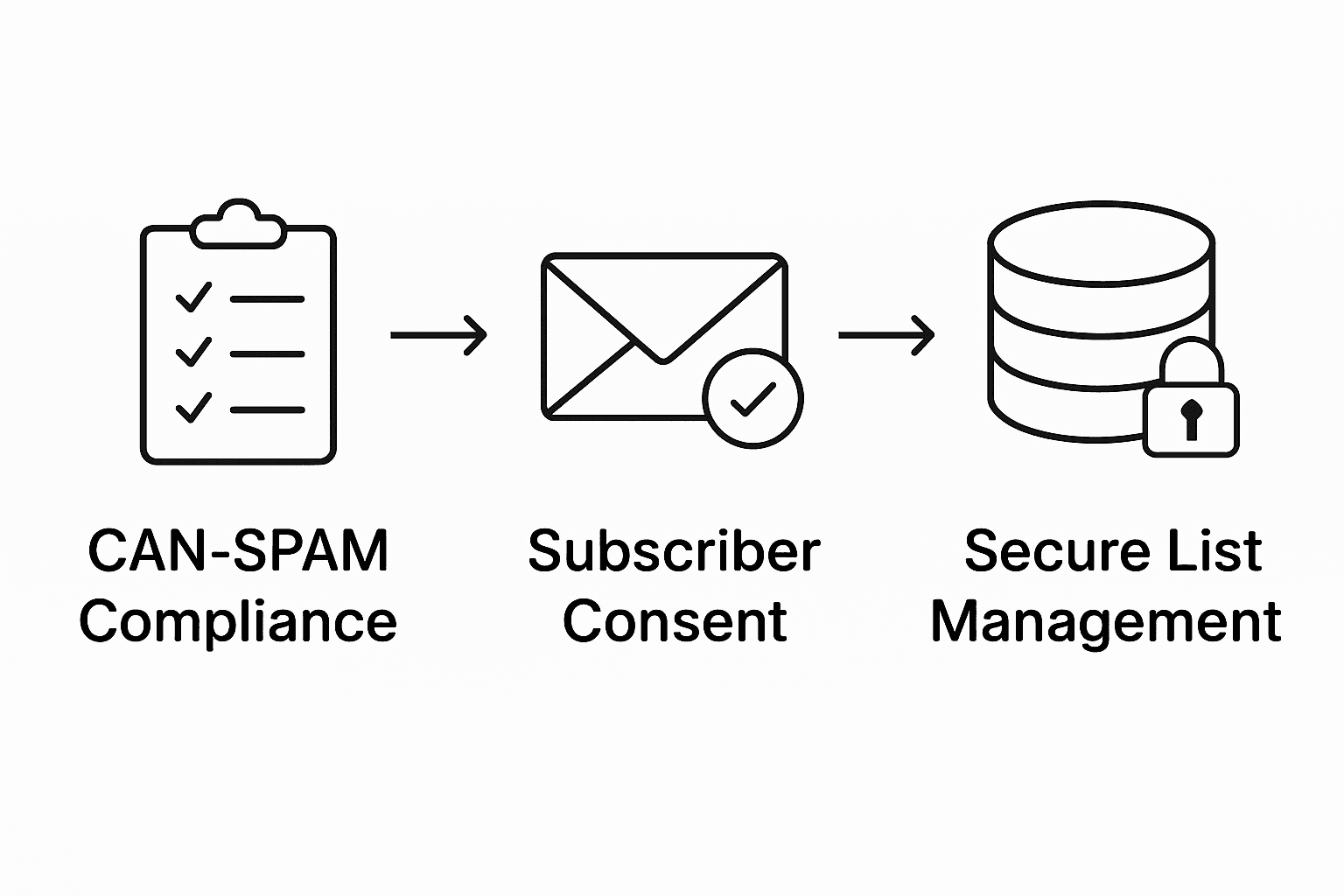
Email address harvesting represents a significant legal and ethical risk that businesses must rigorously avoid. Legitimate email list building requires explicit permission, transparent communication about how subscriber information will be used, and providing genuine value in exchange for contact details. This means developing opt-in processes that clearly explain the nature of communications, the frequency of emails, and the specific benefits subscribers will receive, thereby establishing trust and maintaining legal integrity.
Pro Compliance Strategy Tip: Implement a double opt-in process that requires subscribers to confirm their email address and explicitly agree to receive communications, creating a clear legal record of consent.
Common Mistakes When Using Email Lists
One of the most critical errors in email marketing involves improperly acquiring email addresses through unethical email appending practices, which can severely damage a business’s reputation and legal standing. Email appending, the practice of adding email addresses to an existing customer database without explicit consent, represents a significant violation of digital marketing best practices. This approach not only risks potential legal consequences but also undermines the trust and relationship businesses seek to build with their audience.
Businesses frequently make fundamental mistakes in list management that compromise their marketing effectiveness. These errors include purchasing email lists, failing to segment subscribers appropriately, sending irrelevant content, and maintaining inconsistent communication frequencies. Subscribers quickly become disengaged when they receive generic, non-targeted messages that do not align with their interests or expectations. Successful email marketing requires a nuanced approach that prioritizes personalization, relevance, and genuine value for each recipient.
Email address harvesting represents another dangerous practice that can result in significant legal and reputational risks. Marketers must understand that collecting email addresses without explicit consent not only violates digital marketing ethics but can also trigger spam complaints, damage brand reputation, and potentially lead to financial penalties. Legitimate email list building requires transparent opt-in processes, clear communication about the nature of communications, and a genuine commitment to providing value to subscribers.
Pro List Management Tip: Implement a strict permission-based email collection strategy that includes clear consent mechanisms, transparent communication about how subscriber information will be used, and immediate confirmation of subscription details.
Below is a summary of common mistakes and their business impacts in email list usage:
| Mistake | Description | Negative Impact |
|---|---|---|
| Purchasing Email Lists | Using addresses from third-party sources | Damages reputation, legal issues |
| Poor Segmentation | Treating all subscribers the same | Low engagement, high unsubscribes |
| Irregular Sending Frequency | Inconsistent or excessive emailing | Increases spam complaints |
| Skipping Consent Verification | Not confirming subscriber permissions | Higher risk of fines and blocks |
Unlock the True Power of Your Email List Today
Building and maintaining a high-quality email list is more than just collecting addresses. This article highlights the challenges of subscriber consent, segmentation, and automation that every business faces when trying to convert contacts into loyal customers. If you are struggling with inconsistent engagement or ineffective email campaigns, you are not alone. Achieving lasting customer value requires mastering the art of personalized communication through strategic list segmentation and legally compliant opt-in methods.
At emailedgar.com, we understand that your email list is your silent sales machine working 24/7. Our platform is designed to help you automate targeted email sequences, improve deliverability, and maintain list health—all vital to overcoming the pitfalls of email marketing discussed here.
Experience the difference that expert guidance and proven strategies can make. Visit emailedgar.com now to access free resources and discover how to transform your email list into a powerful growth engine. Don’t let your hard-earned contacts go to waste; start building lasting customer relationships today with our actionable insights and coaching programs.
Frequently Asked Questions
What is an email list and why is it important for businesses?
An email list is a collection of email addresses from individuals who have opted to receive communications from a business. It is crucial for building direct communication channels, enhancing customer relationships, and facilitating targeted marketing efforts.
How can businesses effectively segment their email lists?
Businesses can segment their email lists by using characteristics such as demographics, purchase history, engagement levels, and geographic location. This enables more personalized communication, leading to improved engagement and conversion rates.
What are the legal considerations when managing an email list?
Key legal considerations include complying with the CAN-SPAM Act, obtaining clear consent from subscribers, maintaining an easy opt-out option, and implementing strategies to protect subscriber data and privacy.
What common mistakes should businesses avoid when using email lists?
Common mistakes include purchasing email lists, lacking proper segmentation, sending irrelevant content, and failing to maintain regular communication. Avoiding these pitfalls helps improve engagement and protects brand reputation.