

Over 80 percent of American businesses rank email marketing among their top tools for customer engagement. With inboxes more crowded than ever, standing out requires more than clever writing. Getting each step right can mean the difference between your message being opened or ignored. This guide reveals how to plan, write, and optimize email campaigns that actually spark action and build lasting connections.
Table of Contents
- Step 1: Define Your Audience And Campaign Goal
- Step 2: Craft An Attention-Grabbing Subject Line
- Step 3: Write Compelling And Benefit-Focused Body Copy
- Step 4: Incorporate A Clear Call To Action
- Step 5: Review, Test, And Improve Your Email Copy
Quick Summary
| Key Point | Explanation |
|---|---|
| 1. Define Your Target Audience | Identify a specific demographic to tailor your campaign effectively, ensuring relevance and resonance with recipients. |
| 2. Create Engaging Subject Lines | Write personalized, curiosity-driven subject lines to increase email open rates and capture reader interest immediately. |
| 3. Focus on Benefit-Driven Copy | Craft body text that highlights personal benefits, using clear language and emotional appeal to connect with the reader. |
| 4. Use Strong Calls to Action | Design CTAs that employ powerful verbs and visually stand out, motivating readers to take immediate action. |
| 5. Analyze and Optimize Regularly | Continuously review performance metrics and A/B test variations to refine strategies and improve campaign effectiveness. |
Step 1: Define your audience and campaign goal
Crafting an effective email campaign starts with pinpointing exactly who you want to reach and what specific result you aim to achieve. This critical first step sets the foundation for everything that follows, transforming a generic email blast into a precision marketing instrument.
Begin by understanding your target audience with laser-like focus. Develop specific, measurable goals for your email campaign that align with your business objectives. Ask yourself key questions: What demographic are you targeting? What specific problem does your audience need solved? What language and messaging will resonate most deeply with them?
To create meaningful goals, use the SMART framework tracking specific metrics. For instance, instead of a vague aim like “increase sales,” define a concrete objective such as “generate 500 new leads” or “boost conversion rates by 20% within three months.” This approach ensures your campaign has clear, trackable outcomes that can be analyzed and refined.
Pro tip: Create a one-page audience persona document that captures demographic details, pain points, and communication preferences. This living document will serve as your strategic roadmap throughout the email campaign development process.
Step 2: Craft an attention-grabbing subject line
Mastering the art of writing compelling email subject lines is your secret weapon for breaking through the digital noise and ensuring your messages get opened. Think of your subject line as the front door to your email content one that either welcomes readers in or sends them scrolling past.
Crafting subject lines that spark immediate curiosity requires strategic thinking. Start by using conversational language that sounds like a personal message. Avoid generic corporate speak that feels distant or sales driven. Instead create subject lines that sound like they are coming from a trusted friend or colleague. Numbers work magic here use specific digits to grab attention and promise clear value. For example “5 Proven Strategies to Boost Your Sales This Week” feels more enticing than “Sales Tips.”
Engaging subject lines leverage psychological triggers that make readers stop and click. Ask a provocative question that speaks directly to your audience’s challenges. Create a sense of urgency or exclusivity that makes recipients feel they might miss out if they do not open immediately. Personalization is key add the recipient’s name or reference something specific to their industry or recent interactions to increase connection and relevance.
Pro tip: Conduct a weekly subject line A/B test with slightly different approaches. Track open rates to understand what language and emotional triggers resonate most powerfully with your specific audience.
Step 3: Write compelling and benefit-focused body copy
Writing email body copy that captures attention and drives action is an art form that blends psychology, clarity, and strategic communication. Your goal is to transform bland text into a magnetic message that speaks directly to your reader’s needs and desires.

Crafting effective email body copy requires putting your main point front and center. Start with the most critical information that answers the fundamental question your reader is asking: “What’s in it for me?” Use clear concise language that eliminates industry jargon and speaks in straightforward terms. Break your message into bite sized paragraphs that are easy to scan quickly. Each sentence should serve a purpose moving the reader closer to understanding the unique value you offer.
Compelling email copy goes beyond simple information delivery and creates an emotional connection. Personalize your message by addressing the specific challenges your audience faces. Use persuasive language that highlights tangible benefits rather than just listing features. Paint a vivid picture of how your solution solves their problem or improves their situation. Incorporate storytelling techniques that make your message memorable and relatable. Remember that people make decisions based on emotions and then justify them with logic.
Pro tip: Read your email body copy out loud. If it sounds awkward or doesn’t flow naturally when spoken, rewrite it until it sounds like a conversation you would have with a trusted friend.
Step 4: Incorporate a clear call to action
A powerful call to action is the critical bridge between your email content and the specific outcome you want readers to take. Think of it as the strategic nudge that transforms passive readers into active participants in your business journey.
Designing an effective call to action requires precision and psychological understanding. Start by using strong action verbs that create a sense of immediacy and excitement. Words like “Claim,” “Unlock,” “Discover,” and “Get” trigger psychological impulses that compel readers to click. Make your call to action button visually striking by using contrasting colors that stand out from the rest of your email design. Position the button strategically where it feels like a natural progression of the message you have just communicated.
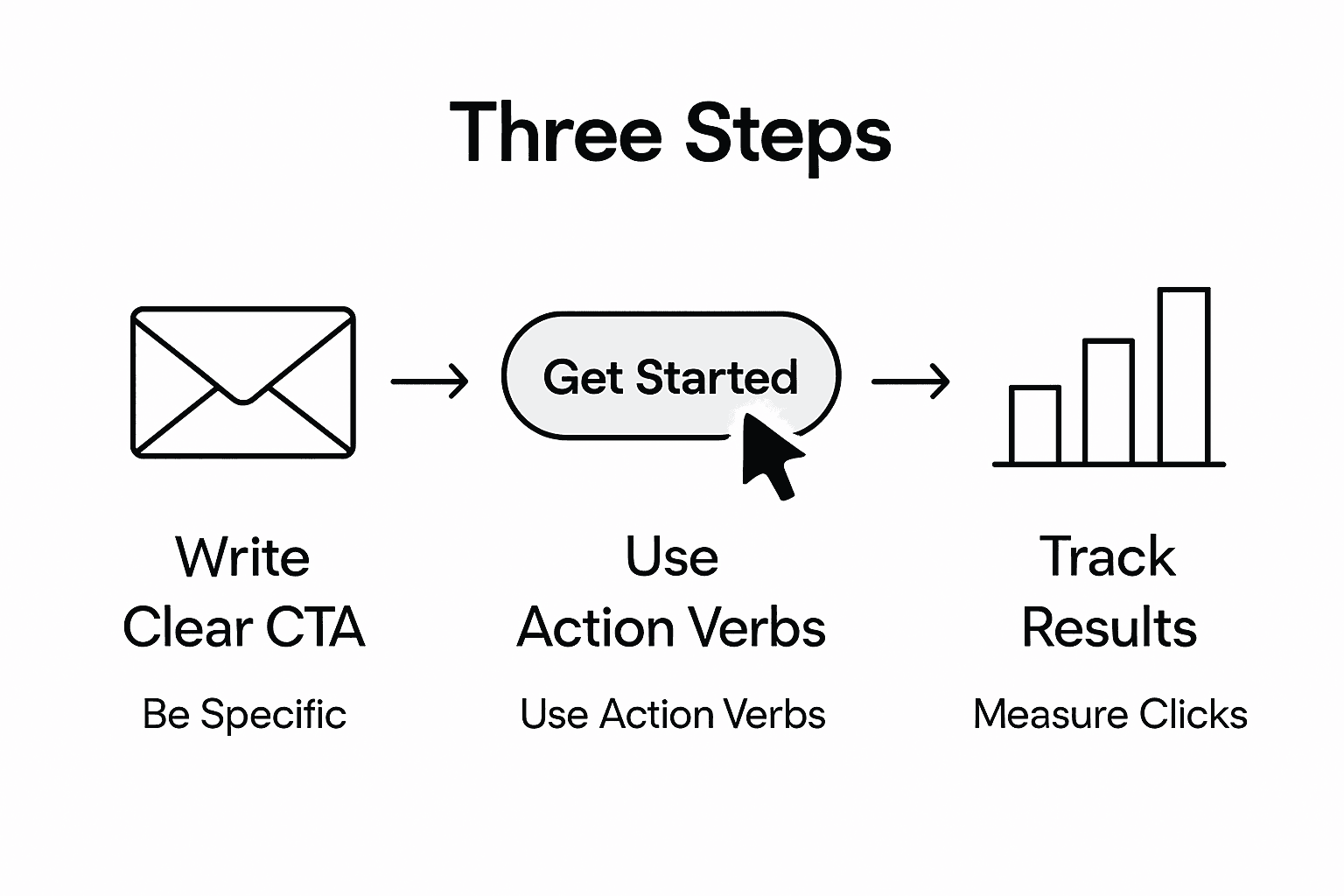
Crafting a call to action goes beyond simple visual design into the realm of strategic communication. Your CTA should feel like a direct solution to the problem or desire you have outlined in your email body. Align the language precisely with the expectations you have set up in your previous content. If you promised to help readers solve a specific challenge make sure your call to action button reflects exactly how you will deliver on that promise. Avoid generic phrases like “Click Here” and instead use specific language that speaks directly to the value proposition.
Pro tip: Create multiple versions of your call to action and A/B test them. Sometimes a small change in wording can dramatically increase click through rates.
Step 5: Review, test, and improve your email copy
Turning good email copy into exceptional email copy requires a commitment to continuous improvement and data driven insights. Think of your email campaigns as living documents that evolve with every send and every interaction.
Optimizing your email campaigns demands a systematic approach to performance analysis. Start by diving deep into your analytics tracking key metrics like open rates, click through rates, and conversion percentages. Pay attention to which subject lines generate the most engagement, which content sections retain reader attention, and where potential readers drop off. Implement A/B testing as your secret weapon create multiple versions of your email with slight variations in language, design, or call to action to understand precisely what resonates with your audience.
Effective email improvement goes beyond simple number crunching and requires strategic audience segmentation. Break your email list into specific groups based on demographics, past interaction history, or engagement levels. Personalize your messaging for each segment ensuring that the content feels like it was crafted specifically for them. Look for patterns in your data that reveal insights about your audiences preferences. Are shorter emails more effective? Do certain tone styles generate more clicks? Use these discoveries to continuously refine your approach.
Pro tip: Create a spreadsheet to track your email performance metrics. Document every campaign variation and its results to build an institutional knowledge base that will inform future email strategies.
This table contrasts A/B testing applications at different stages of an email campaign:
| Campaign Stage | What to Test | Key Metric to Track | Common Improvement Found |
|---|---|---|---|
| Subject Line | Tone, personalization | Open rate | Personalization boosts opens |
| Body Copy | Length, structure | Click-through rate | Shorter, clear text preferred |
| Call to Action | Button text, design | Conversion rate | Action verbs inspire clicks |
Here is a quick summary comparing key elements of effective email campaigns:
| Element | Main Purpose | Best Practices Highlight | Typical Mistake to Avoid |
|---|---|---|---|
| Audience Definition | Focus message on right segment | Use detailed personas | Targeting too broad an audience |
| Subject Line | Drive email opens | Personalize and use numbers | Using vague or generic terms |
| Body Copy | Engage and persuade readers | Highlight benefits, be concise | Overusing jargon or lengthy text |
| Call to Action (CTA) | Motivate specific reader actions | Use strong verbs and contrast | Using generic “Click Here” CTAs |
| Review & Improvement | Optimize results over time | Test and segment regularly | Failing to analyze campaign data |
Unlock the True Power of Your Email Campaigns Today
Creating email copy that converts and engages is a challenge many business owners face. The article highlights key pain points such as capturing attention with compelling subject lines, writing benefit-driven body copy, and crafting clear calls to action that motivate readers. If you find yourself struggling to define your audience precisely or want to move beyond generic phrases and vague offers, you are not alone. These are common hurdles that cause email campaigns to underperform despite the effort invested.
At emailedgar.com, we understand these frustrations and offer a proven path to automate and optimize your email marketing. Our platform serves as the silent sales machine working 24/7 so you don’t have to. You’ll learn how to build and nurture targeted email lists, develop messaging that resonates emotionally, and deploy calls to action that convert effectively. With resources like our comprehensive email marketing strategies book and personalized coaching, you can transform your email efforts into a reliable revenue boost.
Are you ready to stop guessing and start growing your sales with emails crafted to engage your ideal customers?
Discover how to implement these proven techniques and automate your success by visiting Learn More About Automated Email Marketing. Take the first step to become a leader in your market by using email as your most powerful business asset. Start today at emailedgar.com.
Frequently Asked Questions
How can I define my audience for an email campaign?
To define your audience, start by creating a detailed persona that captures demographics, preferences, and pain points. Analyze your current customer base to identify common traits, and document these insights to tailor your email copy effectively.
What should I include in an engaging email subject line?
An engaging email subject line should use conversational language, include numbers for specificity, and evoke curiosity. For example, consider a subject line like “5 Simple Tips to Boost Your Productivity” to catch your reader’s attention right away.
How do I ensure my email body copy is compelling?
To create compelling email body copy, focus on the reader’s needs by stating the benefits of your product or service upfront. Use clear, concise language and avoid jargon to maintain engagement, making it easy for readers to understand the value you offer.
What are the best practices for a strong call to action?
A strong call to action should use active language and create a sense of urgency, encouraging immediate action. Phrases like “Unlock Your Free Trial” can prompt clicks, so place the button prominently within the email to drive conversions.
How can I improve my email campaigns over time?
To improve your email campaigns, consistently review performance metrics like open rates and click-through rates. Implement A/B testing to explore different subject lines and content variations, aiming for at least a 10% increase in your response rates within a few campaigns.