

Most American e-commerce businesses send more than 3 emails per week, yet subscriber engagement often drops when frequency is not carefully managed. Getting your email frequency right matters because it can mean the difference between higher sales and rising unsubscribe rates. This article reveals the myths, critical statistics, and real strategies to help small business owners and marketing managers fine-tune email timing for greater customer connection and lasting results.
Table of Contents
- Defining Email Frequency And Common Myths
- How Email Frequency Shapes Engagement Metrics
- Variations By Industry, Audience, And Automation
- Finding The Right Cadence For E-Commerce Success
- Risks Of Over- Or Under-Sending Emails
- Best Practices For Optimizing Email Frequency
Key Takeaways
| Point | Details |
|---|---|
| Email Frequency vs. Cadence | Email frequency refers to how often messages are sent, while cadence is the regularity. Finding the right balance keeps subscribers engaged without causing fatigue. |
| Impact on Engagement Metrics | Frequency affects key performance indicators like open rates and conversions; too many emails can lead to subscriber fatigue, while too few can reduce brand recall. |
| Industry Variations | Optimal email frequency varies by industry; e-commerce may require more frequent communication, while B2B often benefits from less frequent interactions. |
| Automation and Segmentation | Use advanced segmentation and automation to adjust email frequency based on subscriber behaviors, ensuring personalized communication that maximizes engagement. |
Defining Email Frequency and Common Myths
Email frequency represents the number of messages sent to subscribers over a specific timeframe – whether daily, weekly, monthly, or quarterly. Understanding email lifetime patterns reveals that frequency is far more nuanced than simply counting messages sent.
Contrary to popular belief, email frequency is not a one-size-fits-all metric. Frequency refers to how often emails are distributed, while cadence describes the rhythm and regularity of those communications. Businesses often mistakenly assume that fewer emails automatically prevent subscriber fatigue or that more emails guarantee higher engagement. These assumptions can lead to ineffective email marketing strategies.
Research demonstrates that subscribers have complex interaction patterns with email content. Some recipients revisit emails multiple times, while others quickly scan and discard messages. The key is striking a balanced approach that maintains subscriber interest without overwhelming their inbox. Email engagement research indicates that frequency directly impacts metrics like open rates, conversions, and overall return on investment.
Pro tip: Test different email frequencies with small segments of your subscriber list to determine the optimal communication cadence that maximizes engagement without triggering unsubscribes.
How Email Frequency Shapes Engagement Metrics
Email frequency plays a critical role in determining key performance indicators for digital marketing campaigns. Email deliverability and sending behavior reveal that consistent communication patterns directly impact engagement metrics like open rates, click-through rates, and overall subscriber interaction.
Businesses must recognize that email frequency is a delicate balance between maintaining audience interest and avoiding message fatigue. Engagement metrics are dramatically influenced by how often subscribers receive communications. Too many emails can trigger unsubscribe rates, while too few can lead to diminished brand recall and reduced customer connection. Analyzing email frequency patterns demonstrates that different industries and audience segments require unique approaches to optimal communication cadence.
The research highlights several critical engagement metrics impacted by email frequency. Open rates tend to decline with excessive messaging, while click-through rates can suffer from inconsistent communication schedules. Conversion rates are particularly sensitive to frequency, with subscribers more likely to take action when emails are strategically timed and relevant. Successful email marketers understand that frequency is not about volume, but about delivering valuable content at the right moments.
Here’s a summary highlighting how email frequency impacts core engagement metrics:
| Engagement Metric | High Frequency | Low Frequency |
|---|---|---|
| Open Rate | Can decline due to fatigue | May decrease from low recall |
| Click-Through Rate | Often lowers if messages are excessive | Can drop with inconsistent sends |
| Conversion Rate | Falls with irrelevance | Missed opportunities for action |
| Unsubscribe Rate | Increases with overload | Can spike if forgotten |
| Brand Recall | Maintained with moderation | Weakens with slow communication |
Pro tip: Implement a segmentation strategy that allows you to adjust email frequency based on individual subscriber engagement levels and preferences.
Variations by Industry, Audience, and Automation
Email frequency is not a universal strategy but a nuanced approach that varies dramatically across different industries and audience segments. Email frequency dynamics by industry reveal that what works for one sector may completely fail in another, highlighting the critical importance of tailored communication strategies.
Retail and e-commerce businesses typically benefit from more frequent communications, often sending multiple emails per week to maintain customer engagement and promote time-sensitive offers. In contrast, B2B sectors tend to prefer less frequent, more substantive communications that provide deep value and insights. Sophisticated marketing automation techniques enable businesses to dynamically adjust their email frequency based on individual subscriber behavior, engagement levels, and specific interaction patterns.
Audience segmentation becomes crucial in determining optimal email frequency. Different customer groups – from new subscribers to long-term clients – require unique communication approaches. Younger demographics might tolerate and even appreciate more frequent touchpoints, while professional audiences may prefer carefully curated, less frequent communications. Automation tools now allow marketers to create intricate segmentation strategies that can automatically adjust email frequency based on real-time engagement metrics, ensuring that each subscriber receives content at their preferred cadence.
Pro tip: Create multiple subscriber segments with different frequency preferences and use engagement data to continuously refine your email communication strategy.
The table below compares optimal email frequency approaches for major industries:
| Industry | Typical Frequency | Content Focus | Audience Preference |
|---|---|---|---|
| Retail/E-Commerce | 2-4 emails per week | Promotions, new products | Frequent deals, updates |
| B2B | Monthly or bi-monthly | Insights, case studies | In-depth, less frequent |
| Media/Publishing | Daily or weekly | Newsletters, alerts | Timely information desired |
| Nonprofit | Monthly or quarterly | Updates, campaigns | Low volume, high relevance |
Finding the Right Cadence for E-Commerce Success
Email frequency is a critical strategic lever for e-commerce businesses seeking to maximize customer engagement and sales potential. Email frequency best practices demonstrate that finding the perfect communication rhythm requires a nuanced, data-driven approach that balances customer interest with strategic messaging.
Successful e-commerce email strategies typically incorporate multiple types of targeted communications. Promotional emails highlighting sales and discounts can be sent more frequently, while product recommendation emails should be more selectively distributed. Transactional emails like order confirmations, shipping updates, and abandoned cart reminders serve critical customer communication needs without feeling intrusive. The key is creating a strategic mix that provides value without overwhelming subscribers, using engagement metrics to continuously refine timing and frequency.
Automation technology enables sophisticated personalization of email cadence. Advanced segmentation allows businesses to dynamically adjust communication frequency based on individual customer behaviors, purchase history, and interaction patterns. For instance, a new subscriber might receive a welcome series with higher frequency, while long-term customers receive more curated, less frequent communications. This adaptive approach ensures that each customer receives content that feels relevant and timely, ultimately supporting higher conversion rates and customer retention.
Pro tip: Implement a progressive email frequency strategy that adapts to individual subscriber engagement levels, using automated tools to track and respond to changing interaction patterns.
Risks of Over- or Under-Sending Emails
Email marketing success hinges on striking a delicate balance between communication frequency and audience engagement. Email sending behavior risks reveal that both over-sending and under-sending can dramatically undermine marketing effectiveness, potentially causing long-term damage to brand reputation and customer relationships.
Over-sending emails creates significant risks for businesses. When subscribers receive too many messages, they experience communication fatigue, leading to increased unsubscribe rates and decreased engagement. Mailbox providers may interpret high-volume sending as potential spam activity, which can trigger sophisticated filtering mechanisms that reduce overall email deliverability. Email frequency management demonstrates that excessive emails can erode subscriber trust and diminish the perceived value of your brand’s communications.
Conversely, under-sending emails presents its own set of challenges. Infrequent communication can cause subscribers to forget about your brand, resulting in reduced mindshare and missed revenue opportunities. Dormant mailing lists quickly become less responsive, with decreased open rates and higher bounce rates. The key is developing a consistent, strategic approach that maintains subscriber interest without overwhelming their inbox, using data-driven insights to optimize communication frequency.
Pro tip: Implement a dynamic email frequency strategy that uses engagement metrics to automatically adjust communication volume, ensuring each subscriber receives the right number of messages at the right time.
Best Practices for Optimizing Email Frequency
Email frequency optimization requires a strategic, data-driven approach that balances subscriber preferences with marketing objectives. Email frequency management strategies provide sophisticated techniques for tailoring communication volumes that maximize engagement and minimize subscriber fatigue.
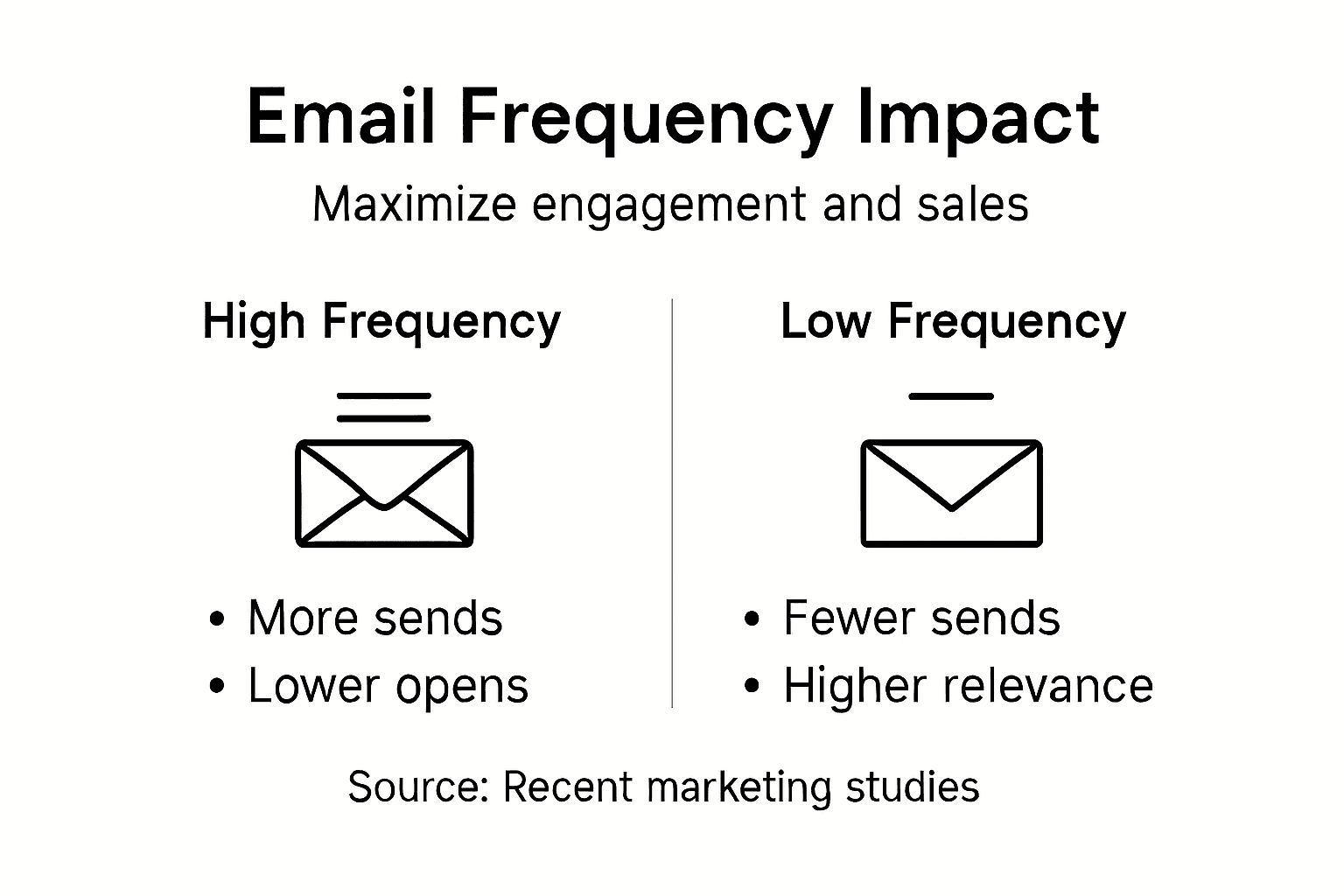
Successful email frequency optimization involves multiple interconnected techniques. Audience segmentation emerges as a critical first step, allowing marketers to create distinct communication paths based on subscriber behavior, engagement history, and demographic characteristics. Some subscribers might appreciate weekly updates, while others prefer monthly digests. Advanced segmentation enables businesses to dynamically adjust email frequency, ensuring each recipient receives communications at their optimal cadence.
Technology plays a pivotal role in frequency management. Modern email marketing platforms offer sophisticated automation tools that track subscriber interactions, automatically adjusting send frequencies based on real-time engagement metrics. These systems can identify when a subscriber is becoming disengaged and proactively modify communication patterns to re-establish connection. Key optimization strategies include implementing preference centers where subscribers can self-select their desired email frequency, conducting systematic A/B testing to identify optimal send rates, and continuously monitoring deliverability and engagement metrics.
Pro tip: Create a comprehensive subscriber preference center that allows granular control over email frequency, content type, and communication timing to maximize individual user satisfaction.
Master Email Frequency to Boost Engagement and Sales Today
Struggling to find the perfect balance in your email sending strategy can hurt your engagement and sales. This article highlights how getting your email frequency right affects open rates, conversions, and subscriber retention. If you want to avoid fatigue while maximizing your brand’s reach, it is crucial to master concepts like cadence, segmentation, and automation — all discussed here.
Unlock the power of automated, data-driven email marketing with emailedgar.com. Our platform guides you through building a tailored email frequency strategy that keeps your audience engaged without overwhelming them. Discover how to position email as a silent sales machine working around the clock to increase revenue. Start optimizing your campaigns now by learning more about effective email frequency and get access to free resources and expert coaching at emailedgar.com. Don’t wait to turn email frequency challenges into your biggest marketing advantage.
Frequently Asked Questions
What is email frequency and why is it important?
Email frequency refers to how often emails are sent to subscribers within a specific timeframe. It’s crucial because it impacts engagement metrics like open rates, click-through rates, and overall conversion rates, affecting the success of email marketing strategies.
How can I determine the optimal email frequency for my audience?
To find the right email frequency, test different sending schedules with small segments of your subscriber list and monitor engagement metrics. Consider audience segmentation and individual preferences to refine your strategy.
What are the risks of sending too many or too few emails?
Sending too many emails can lead to subscriber fatigue, increased unsubscribe rates, and potential spam filtering, hurting brand trust. Conversely, infrequent emails may cause subscribers to forget your brand, resulting in lower engagement and missed revenue opportunities.
How can automation help in managing email frequency?
Automation tools allow for sophisticated segmentation of your audience, dynamically adjusting email frequency based on individual behaviors and engagement levels. This ensures that each subscriber receives communications at their preferred cadence, enhancing engagement and customer retention.