

Most American businesses struggle to get noticed in crowded inboxes, yet personalized emails achieve open rates up to 29 percent higher than generic blasts. For small business owners and digital marketers, this difference can mean the edge in automating customer engagement and driving real sales growth. Discover how targeted strategies help you connect with the right audience, craft irresistible messages, and maximize your email marketing results.
Table of Contents
- Step 1: Identify And Segment Your Email List
- Step 2: Craft Compelling Subject Lines
- Step 3: Personalize And Optimize Email Content
- Step 4: Test Send Times And Frequency
- Step 5: Analyze Results And Adjust Tactics
Quick Summary
| Key Takeaway | Explanation |
|---|---|
| 1. Segment Your Email List Effectively | Analyze subscriber data to create specific audience segments for targeted messaging. This increases engagement by addressing unique needs. |
| 2. Create Compelling Subject Lines | Use curiosity, urgency, and personalization in subject lines to improve open rates. Short and clear messages resonate better with recipients. |
| 3. Personalize Email Content | Tailor email content to reflect each subscriber’s interests and preferences, enhancing the relevance and value of your communications. |
| 4. Test Send Times and Frequency | Experiment with different send times and frequency to determine optimal engagement levels and avoid subscriber fatigue. |
| 5. Analyze Results and Adjust Tactics | Regularly track key performance indicators to refine strategies and enhance future campaigns based on data-driven insights. |
Step 1: Identify and Segment Your Email List
Identifying and segmenting your email list represents a strategic approach to transforming generic email campaigns into precision marketing tools. By breaking down your subscriber base into specific groups, you can craft targeted messages that resonate more powerfully with each unique audience segment.
The process begins with analyzing your current subscriber data through multiple lenses. Advanced email list segmentation methodologies reveal that effective segmentation goes far beyond simple demographic splits. You want to consider behavioral patterns, engagement history, purchase records, and specific interaction points with your business. Start by examining metrics like open rates, click through frequencies, purchase history, and website browsing behaviors. These data points will help you create meaningful clusters of subscribers who share similar characteristics or interests.
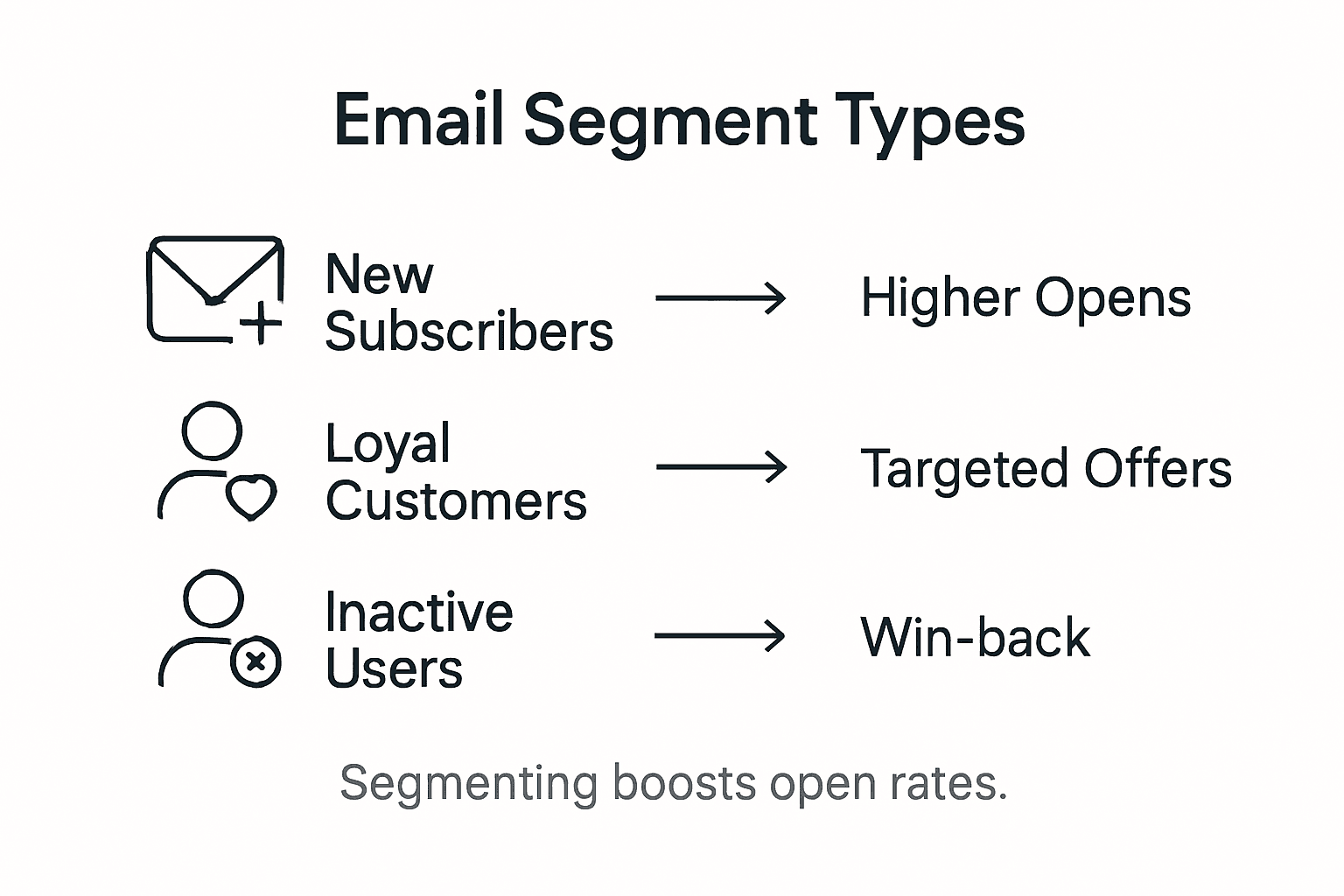
To implement segmentation effectively, consider breaking your list into categories such as new subscribers, frequent purchasers, inactive members, or subscribers with specific product interests. Each segment receives communications tailored precisely to their demonstrated preferences and interactions. This targeted approach significantly increases the likelihood of engagement, as recipients feel the content speaks directly to their needs and experiences.
Here’s a quick reference to common email list segments and their business value:
| Segment Type | Key Characteristics | Marketing Benefit |
|---|---|---|
| New Subscribers | Recently joined, low data | Introduce brand, build interest |
| Frequent Purchasers | Repeat buyers, engaged | Upsell, foster loyalty |
| Inactive Members | No engagement recently | Win-back campaigns, re-activation |
| Niche Interests | Specific product or service | Highly relevant offers |
Pro tip: Use email marketing platforms with robust segmentation features that automatically update subscriber groups based on real time interaction data.
Step 2: Craft Compelling Subject Lines
Crafting compelling subject lines is your critical first step in grabbing subscriber attention and dramatically improving email open rates. Your subject line serves as the gateway that determines whether recipients will engage with your message or scroll past.

Research on subject line best practices reveals specific strategies that significantly impact email engagement. Focus on creating subject lines that blend curiosity, urgency, and personalization. This means moving beyond generic headlines and developing messages that speak directly to your audience’s interests and pain points. Use language that creates an emotional trigger challenging recipients to learn more. For instance, instead of a bland announcement like “Monthly Newsletter,” try something more intriguing such as “Your Hidden Strategy for Boosting Sales This Quarter” or “3 Secrets Top Entrepreneurs Never Share.”
Successful subject lines typically incorporate several key elements. They should be concise (ideally under 50 characters), create a sense of urgency, offer clear value, and feel personally relevant. Experiment with techniques like asking questions, using numbers, highlighting exclusive information, or creating a knowledge gap that makes readers curious. Always aim to solve a problem or fulfill a desire in your subject line. Track your results carefully and continuously test different approaches to understand what resonates most with your specific audience.
Pro tip: Create a swipe file of subject lines that have caught your attention and analyze what makes them compelling.
Step 3: Personalize and Optimize Email Content
Personalizing your email content transforms generic communications into targeted messages that resonate deeply with individual subscribers. Your goal is to create an experience that feels uniquely crafted for each recipient, making them feel understood and valued.
Global field experiments demonstrate that personalized content dramatically improves engagement, with significant increases in open rates and customer retention. Beyond simply inserting a recipient’s name, true personalization involves understanding their specific interests, behaviors, and pain points. Leverage the segmentation data you collected earlier to craft content that speaks directly to each group’s unique needs. For software engineers, discuss technical challenges. For marketing professionals, highlight strategic insights. For small business owners, focus on practical growth strategies.
To optimize your email content, concentrate on creating value in every message. Use a conversational tone that feels like a direct communication from a trusted advisor. Break up text with short paragraphs, use compelling subheadings, and include clear calls to action. Ensure your content is mobile friendly, with responsive design that looks great on smartphones and tablets. Incorporate visual elements like infographics or short videos when possible, as these can increase engagement and help communicate complex ideas quickly.
Pro tip: Create a content template for each subscriber segment that allows for quick customization while maintaining a consistent brand voice.
Step 4: Test Send Times and Frequency
Testing email send times and frequency is crucial for maximizing engagement and preventing subscriber fatigue. Your goal is to discover the optimal timing that ensures your messages are read and appreciated rather than ignored or marked as spam.
Global research on email marketing best practices reveals that successful email campaigns require systematic testing of send times and frequency. Begin by analyzing your existing subscriber data to understand their typical online behaviors. Consider factors like time zones, work schedules, and historical interaction patterns. Most professionals check emails in the morning before work, during lunch breaks, and in the early evening. However, your specific audience might have unique preferences that only careful testing will reveal.
Implement a structured A/B testing approach to determine the most effective send times and frequency. Start by creating multiple variants of your email campaign with different send times and intervals. Track key metrics such as open rates, click through rates, and unsubscribe rates. Be cautious about overwhelming your subscribers with too many emails. A good rule of thumb is to start with one to two emails per week and adjust based on subscriber engagement. Pay attention to subtle signals like decreased open rates or increased unsubscribe requests, which might indicate you are sending too frequently.
Pro tip: Use email marketing analytics tools that automatically track and suggest optimal send times based on your specific audience interactions.
Step 5: Analyze Results and Adjust Tactics
Analyzing your email campaign results is the critical final step in creating a continuously improving marketing strategy. Your goal is to transform raw data into actionable insights that help you refine and optimize future email communications.
Global research on email marketing performance measurement demonstrates the importance of systematic result analysis. Begin by tracking key performance indicators such as open rates, click through rates, conversion rates, and unsubscribe percentages. Look beyond surface level numbers to understand the deeper story behind your metrics. A low open rate might indicate problems with subject lines, while a high unsubscribe rate could signal that your content is not meeting subscriber expectations.
The table below summarizes key email campaign metrics and what they reveal:
| Metric | What It Measures | Insight for Marketers |
|---|---|---|
| Open Rate | Email opens vs sent | Subject line effectiveness |
| Click Rate | Link clicks in email | Content relevance, call to action |
| Conversion Rate | Desired actions taken | Campaign’s impact on sales/goals |
| Unsubscribe Rate | Opt-outs after campaign | Content or frequency disconnect |
Develop a structured approach to interpreting your email marketing data. Compare results across different segments, test variations, and time periods to identify consistent patterns. Pay attention to granular details like which content types generate the most engagement, what send times produce the highest open rates, and which audience segments demonstrate the most consistent interaction. Remember that email marketing is an iterative process. Each campaign provides valuable learning opportunities, allowing you to progressively refine your strategy and create more targeted, compelling communications that resonate with your audience.
Pro tip: Create a monthly dashboard that tracks your key email marketing metrics, allowing you to quickly visualize performance trends and make data driven adjustments.
Unlock Higher Email Open Rates With Automated Precision
Struggling to boost your email open rates despite your best efforts? The challenge of crafting compelling subject lines, perfecting send times, and segmenting your list can feel overwhelming. This article reveals the power of targeted personalization and strategic testing to turn your emails into a powerful engagement tool. If your goal is to increase sales and keep your audience captivated, mastering these key tactics is essential.
At emailedgar.com we understand that building and maintaining a dynamic email list is your silent sales machine working around the clock. Our platform empowers business owners to automate and optimize email marketing campaigns with ease. From leveraging behavioral segmentation to crafting irresistible subject lines, we guide you to implement strategies that transform email into your most dependable revenue driver.
Experience the difference of consistently higher open rates and stronger customer connections starting today.
Take control of your email marketing success now by exploring our proven frameworks at emailedgar.com. Discover real client testimonials and gain instant access to free resources designed to elevate your campaigns. Don’t let your emails get lost in the inbox let us help you turn every send into an opportunity for growth and engagement.
Frequently Asked Questions
How can I improve my email open rates immediately?
To improve your email open rates quickly, focus on crafting compelling subject lines that create curiosity and urgency. Aim to test different subject lines with variations in wording and emotional triggers to find what resonates best with your audience.
What are effective strategies for segmenting my email list?
Effective strategies for segmenting your email list include analyzing subscriber behaviors, such as engagement history and purchase records. Break your list into categories like new subscribers or frequent purchasers to tailor your communication, increasing the likelihood of engagement.
How often should I send emails to maximize engagement?
To maximize engagement, start with sending one to two emails per week and monitor subscriber reactions. Adjust your frequency based on engagement metrics, such as open rates and unsubscribe requests, to find the right balance for your audience.
What elements make up a compelling subject line?
Compelling subject lines should be concise, create a sense of urgency, and feel personally relevant to the recipient. Use emotional triggers, numbers, or intriguing questions to draw attention, and test different approaches to see what works best.
How can I analyze the effectiveness of my email campaigns?
To analyze the effectiveness of your email campaigns, track key performance indicators like open rates, click rates, and conversion rates. Regularly review these metrics to identify trends, adjust your strategy, and enhance future communications based on subscriber responses.
What are some common email segment types and their benefits?
Common email segment types include new subscribers, frequent purchasers, and inactive members. Each segment allows you to craft targeted messages that address specific interests or needs, ultimately increasing engagement and improving your overall email marketing outcomes.