

Most American small businesses lose over 20 percent of their email marketing messages to spam or invisible folders each month. That means fewer customers see your offers and updates, directly impacting sales and loyalty. When automated campaigns depend on strong deliverability, understanding what really gets messages into inboxes can change growth for global e-commerce owners. This guide reveals the technical truths behind email deliverability and debunks common myths, so you can improve results and protect your sender reputation.
Table of Contents
- Defining Email Deliverability And Common Myths
- How Email Delivery Systems Function
- Crucial Factors Impacting Inbox Placement
- Sender Reputation And Authentication Standards
- Avoiding Spam Filters And Delivery Mistakes
Key Takeaways
| Point | Details |
|---|---|
| Understanding Email Deliverability | Email deliverability is influenced by sender reputation, engagement metrics, and authentication protocols, not just sending emails. Monitor these factors to improve delivery success. |
| Debunking Common Myths | Beliefs like high sending volume guarantees success are misleading. Focus on maintaining a clean, engaged email list and consistent sending practices. |
| Importance of Authentication | Implementing SPF, DKIM, and DMARC protocols enhances sender trustworthiness and prevents spoofing, which improves inbox placement rates. |
| Navigating Spam Filters | Avoid triggering spam filters by managing content quality, monitoring sender reputation, and ensuring technical compliance for successful email delivery. |
Defining Email Deliverability and Common Myths
Email deliverability represents the complex process determining whether your marketing messages successfully reach recipients’ email inboxes. Unlike simple sending, deliverability involves multiple technical and engagement factors that dictate whether internet service providers (ISPs) will accept and place your messages in subscribers’ primary inboxes.
Several persistent myths surround email deliverability that can significantly impact small business marketing strategies. Common email marketing misconceptions continue to plague global marketers and prevent them from optimizing their communication channels. Many entrepreneurs mistakenly believe that sending emails guarantees their receipt by intended recipients, when in reality, multiple sophisticated screening mechanisms exist to evaluate incoming messages.
The core elements influencing email deliverability include sender reputation, email authentication protocols, content quality, and recipient engagement metrics. Sophisticated algorithms assess factors like spam complaint rates, email infrastructure configuration, and historical sending patterns to determine whether your messages deserve inbox placement. Your sender reputation acts like a digital trust score that ISPs use to evaluate the legitimacy and value of your communications.
Pro tip: Regularly monitor your email sender reputation using free online tools and maintain consistent, high-quality engagement with your subscriber list to improve long-term deliverability performance.
Here’s how common email deliverability myths differ from reality:
| Myth | Reality | Impact on Business |
|---|---|---|
| Sending guarantees inbox delivery | ISPs use filters and algorithms | Can lower open rates unexpectedly |
| Avoiding “spammy” words is enough | Engagement and reputation are crucial | Oversimplifies deliverability strategies |
| All email lists are equally effective | Clean, active lists perform better | Poor lists harm sender reputation |
| High sending volume ensures success | Consistency and trust matter more | Sudden spikes flag as potential spam |
How Email Delivery Systems Function
Email delivery systems represent a sophisticated network of interconnected protocols and servers that transform a simple message into a precisely routed communication. Step-by-step email transmission processes involve multiple technical components working seamlessly to ensure messages reach their intended destinations.

The core infrastructure relies on three primary communication protocols: Simple Mail Transfer Protocol (SMTP), Post Office Protocol (POP), and Internet Message Access Protocol (IMAP). SMTP handles outgoing messages, acting as a digital postal service that routes emails between mail servers. When you click send, SMTP servers verify the recipient’s address, determine the destination server, and initiate the transmission process.
Recipient servers then apply complex screening mechanisms to evaluate incoming messages. These systems analyze sender reputation, message content, authentication protocols, and historical sending patterns to determine whether an email deserves inbox placement. Sophisticated algorithms check for potential spam indicators, validate sender credentials, and assess the overall trustworthiness of the communication.
Pro tip: Configure your email authentication protocols like SPF, DKIM, and DMARC to significantly improve your chances of successful message delivery and reduce the likelihood of being marked as spam.
Crucial Factors Impacting Inbox Placement
Email inbox placement represents a complex algorithmic decision influenced by multiple interconnected factors that extend far beyond simple message transmission. Global email deliverability benchmarks reveal increasingly sophisticated screening mechanisms that evaluate sender credibility through intricate computational processes.
The primary factors determining inbox placement include sender reputation, engagement metrics, authentication protocols, and content quality. Internet Service Providers (ISPs) analyze historical sending patterns, tracking metrics like open rates, click-through rates, and user interactions to assess the legitimacy and value of incoming messages. Negative signals such as high spam complaint rates or low engagement can dramatically reduce your chances of successful email delivery.
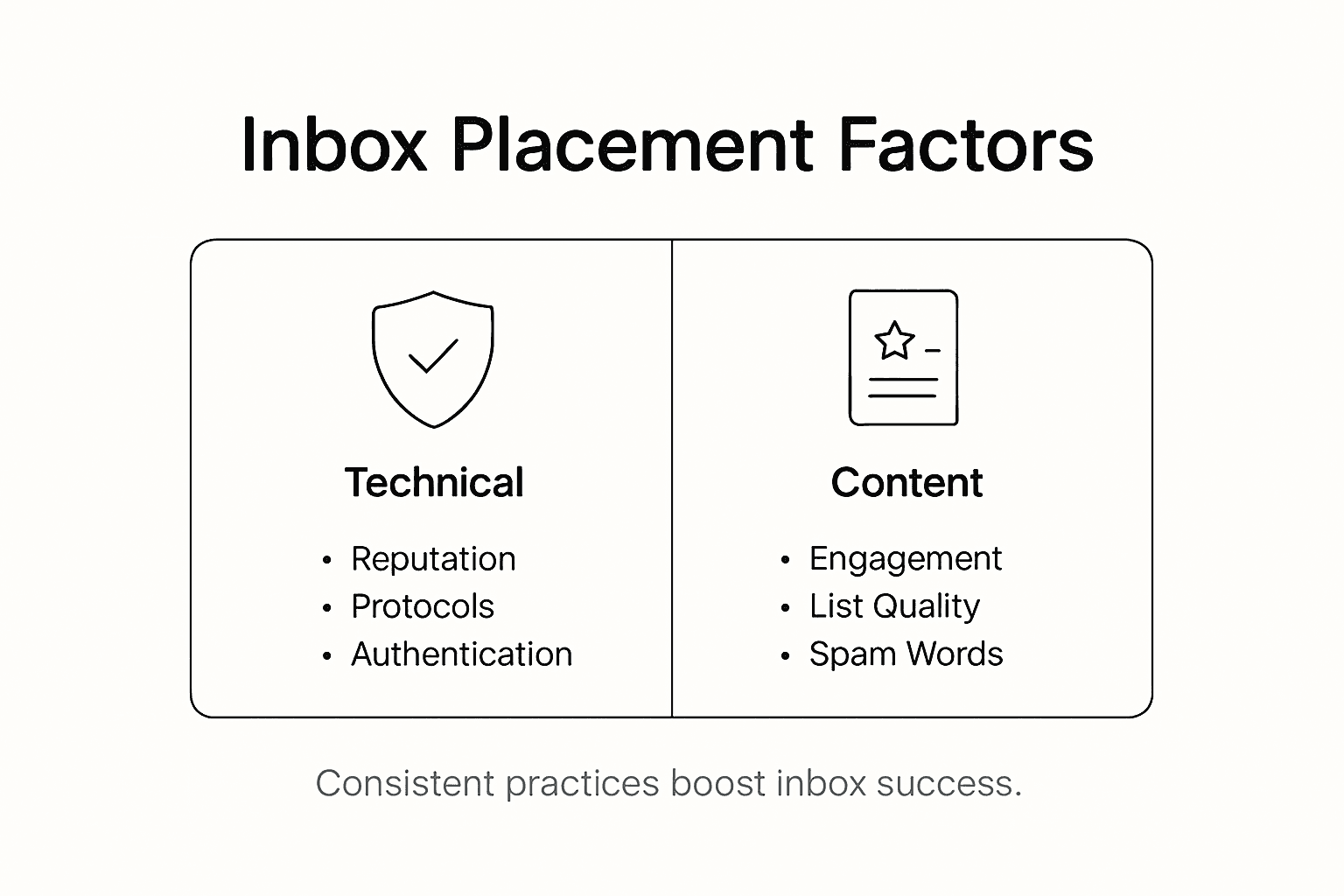
Technical authentication protocols play a critical role in establishing sender trustworthiness. Mechanisms like Sender Policy Framework (SPF), DomainKeys Identified Mail (DKIM), and Domain-based Message Authentication, Reporting, and Conformance (DMARC) provide cryptographic verification that emails genuinely originate from authorized sources. These protocols help prevent email spoofing and provide ISPs with verifiable evidence of a sender’s authenticity.
Pro tip: Regularly clean your email list, remove inactive subscribers, and maintain consistent sending volumes to improve your sender reputation and increase inbox placement rates.
Sender Reputation and Authentication Standards
Sender reputation represents a critical digital passport determining whether your emails successfully navigate complex communication networks. Global email authentication guidelines have established increasingly stringent protocols that evaluate sender credibility through sophisticated computational frameworks.
Three primary authentication mechanisms form the cornerstone of modern email verification: Sender Policy Framework (SPF), DomainKeys Identified Mail (DKIM), and Domain-based Message Authentication, Reporting, and Conformance (DMARC). SPF verifies that emails originate from authorized servers, DKIM provides cryptographic signatures ensuring message integrity, and DMARC combines these technologies to create a comprehensive authentication system that prevents email spoofing and protects recipients from potential security threats.
Building and maintaining a positive sender reputation requires consistent, strategic email practices. Internet Service Providers (ISPs) continuously monitor multiple engagement signals, including open rates, click-through percentages, spam complaint frequencies, and list management practices. Senders demonstrating high-quality content, engaged subscribers, and clean sending infrastructure are rewarded with improved inbox placement and increased message visibility.
Pro tip: Implement a comprehensive email authentication strategy by configuring SPF, DKIM, and DMARC protocols, and regularly audit your sending practices to maintain a pristine sender reputation.
The following table summarizes how major email authentication protocols protect communications:
| Protocol | Main Function | Business Benefit |
|---|---|---|
| SPF | Authorizes sending servers | Prevents address spoofing |
| DKIM | Verifies message content | Confirms email integrity |
| DMARC | Aligns SPF/DKIM, reports failures | Improves domain trust and visibility |
Avoiding Spam Filters and Delivery Mistakes
Spam filters represent complex algorithmic gatekeepers designed to protect users from unwanted communications. Advanced spam detection technologies have transformed email filtering strategies, creating increasingly sophisticated barriers that small businesses must strategically navigate.
Multiple critical factors trigger spam filter mechanisms. Content-related red flags include excessive capitalization, numerous hyperlinks, suspicious keyword patterns, and messaging that appears overly promotional. Technical indicators like inconsistent sender authentication, poor IP reputation, and sudden spikes in email volume can immediately signal potential spam, causing automatic message rejection or filtering into secondary folders.
Successful email delivery requires a nuanced approach to content creation and technical configuration. Internet Service Providers (ISPs) analyze comprehensive engagement metrics, including recipient interaction rates, spam complaint percentages, and sending consistency. Businesses must develop a holistic strategy that balances compelling messaging with technical compliance, carefully monitoring subscriber behaviors and maintaining a clean, responsive email list.
Pro tip: Implement a rigorous email validation process, use reputable email service providers, and consistently monitor your sender reputation to minimize the risk of spam classification.
Unlock True Email Deliverability Success with Expert Guidance
Many businesses struggle with ensuring their emails reach buyers’ inboxes rather than spam folders. The challenges of managing sender reputation, configuring authentication protocols like SPF and DKIM, and maintaining engagement can feel overwhelming. This article highlights how crucial consistent list management and technical setup are to building trust with Internet Service Providers. Without addressing these issues, your carefully crafted messages may never be seen by your target customers.
At emailedgar.com, we understand these pain points and provide you with the tools and strategies to transform your email marketing into a silent sales machine. Our platform helps you automate high-quality email campaigns while maintaining a strong sender reputation and compliance with email authentication standards. Whether you need to clean inactive subscribers, optimize content to avoid spam filters, or learn proven engagement tactics, we are your go-to resource for boosting inbox placement and maximizing revenue.
Start mastering your email deliverability today and watch your sales grow effortlessly.
Unlock powerful email marketing strategies now
Don’t wait until deliverability issues cost you customers. Visit Learn More at emailedgar.com and get access to expert coaching, free resources, and proven methods that keep your messages landing where they should—in the inbox.
Frequently Asked Questions
What is email deliverability?
Email deliverability refers to the process that determines whether your marketing emails successfully reach recipients’ inboxes. It involves various technical and engagement factors and is distinct from simply sending emails.
How can I improve my email sender reputation?
To improve your sender reputation, maintain high-quality engagement with your subscriber list, regularly clean your email list, and monitor your sender reputation using free online tools.
What role do email authentication protocols play in deliverability?
Email authentication protocols like SPF, DKIM, and DMARC help establish sender trustworthiness by verifying that emails originate from authorized sources, thus improving the chances of successful message delivery and reducing the likelihood of being marked as spam.
What should I avoid to prevent my emails from being marked as spam?
Avoid excessive capitalization, numerous hyperlinks, and overly promotional language in your content. Also, ensure proper technical configuration, consistent sender authentication, and maintain a clean email list to prevent triggering spam filters.
Recommended
- Email Marketing Do’s And Don’ts: The Beginners List – EmailEdgar
- Top Mistakes to Avoid in Email Copywriting – EmailEdgar
- Welcome Email: 4 Tips To Writing AN Engaging Welcome Email
- Email Marketing Mistakes That Even Mother Teresa Would Not Admit Too
- Outbound Prospecting Explained: Complete Expert Overview